
Common Prescription Label Misunderstandings and How to Avoid Them
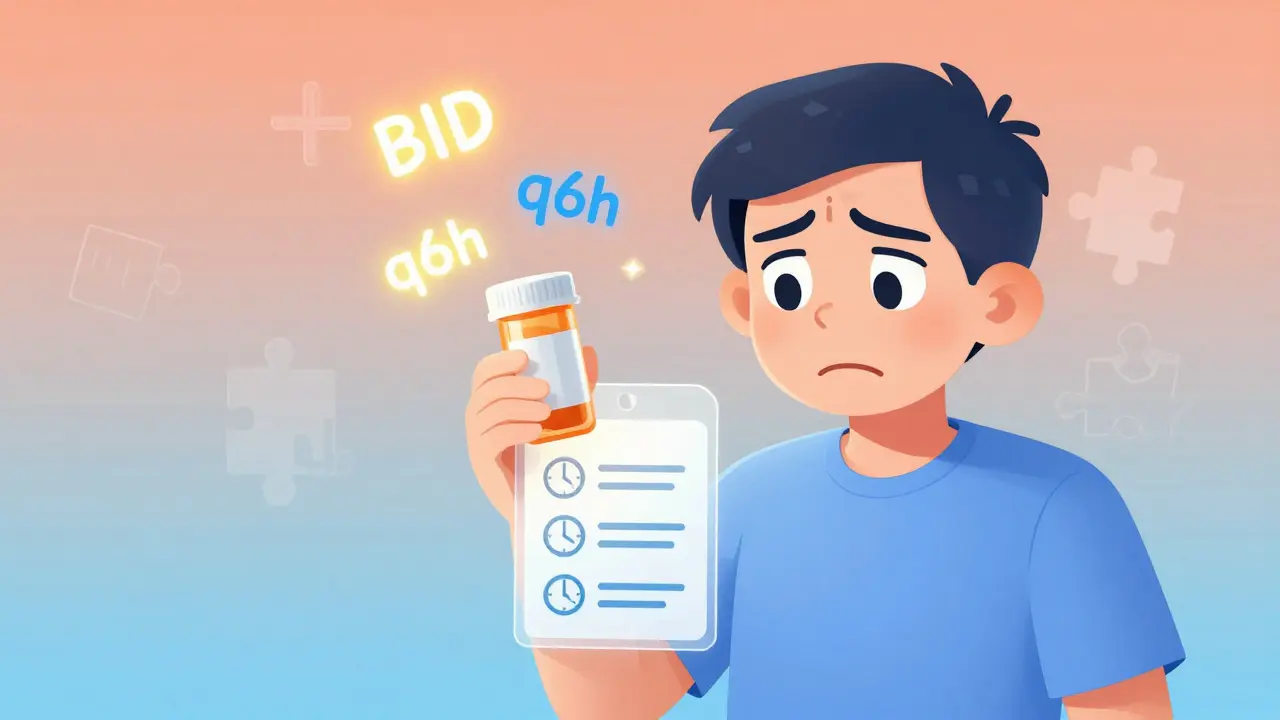
Every year, millions of people in the U.S. take their medicine wrong-not because they’re careless, but because the label on the bottle doesn’t make sense. You might think you’re reading it right, but the words are too technical, the timing is unclear, or the symbols look like hieroglyphs. And it’s not just older adults. Even college-educated people mess up. A 2009 study found that 23% of people with good reading skills misunderstood basic instructions like "take twice daily." That’s not a small number. That’s a safety crisis.
What You’re Really Seeing on Your Prescription Label
Look at your prescription label. What do you see? "Take 1 tablet by mouth twice daily." Sounds simple, right? But what does "twice daily" actually mean? For many, it means every 12 hours-morning and night. For others, it means "whenever I remember," or worse, "twice in one day, then stop." The problem isn’t you. It’s the label. Pharmacies use outdated templates that were designed for doctors, not patients. They use abbreviations like "q6h" (every 6 hours) or "BID" (twice a day). These aren’t just confusing-they’re dangerous. A Reddit thread from May 2023 had over 1,200 comments from people who took antibiotics too often because they thought "q6h" meant four times a day (24 divided by 6). One person ended up in the ER with stomach bleeding. Even basic phrases like "take with food" are misread. Some people think it means "take instead of food." Others take it with a cup of coffee, which can interfere with absorption. A 2021 FDA test found that 68% of patients didn’t understand the symbol for "take with food"-a picture of a plate with a pill on top. That’s not a design flaw. That’s a failure.The Real Culprit: Low Health Literacy
It’s easy to blame patients for not understanding. But the real issue is that most prescription labels are written at an 8th-grade reading level or higher. The FDA recommends a 6th-grade level. Why? Because 36% of U.S. adults have basic or below-basic health literacy, according to the National Assessment of Adult Literacy. That means they struggle to read a medicine bottle, even if they can read a newspaper. Studies show that patients with low literacy are 3.4 times more likely to make a dosing mistake. And it’s not just about reading. It’s about memory, attention, and context. If you’re tired, stressed, or managing five different medications, a label that says "take on an empty stomach" doesn’t mean much if you don’t know what "empty stomach" actually means. Is it before breakfast? After brushing your teeth? Two hours after a snack? Worse, labels often skip key details. A 2010 analysis found that 6% of prescriptions didn’t include how often to take the medicine. Others didn’t say whether to take it with water, whether to avoid alcohol, or whether to finish the whole bottle. These aren’t small details. They’re life-or-death.What Makes a Label Actually Work?
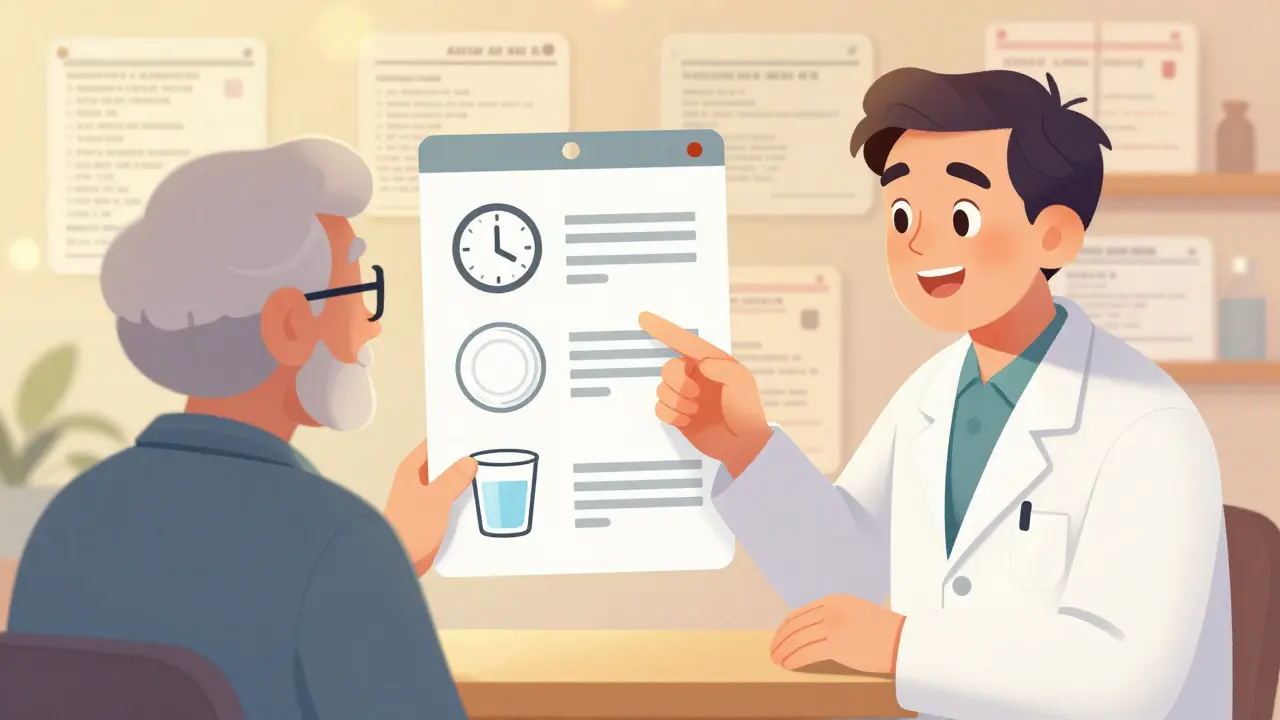
The good news? We know what works. The U.S. Pharmacopeia (USP) created standards back in 2007. Their guidelines are simple:- Use plain language: "Take 1 tablet by mouth two times a day-once in the morning and once at night."
- Avoid abbreviations: No "BID," no "q6h." Just say it.
- Use active voice: "Take the pill" not "The pill should be taken."
- Limit instructions to one or two steps.
- Include clear icons: A clock for timing, a plate for food, a glass of water for hydration.
- Print in large, high-contrast text: At least 12-point font, dark ink on white background.
Why Isn’t Everyone Doing This?
Because it costs money. Updating pharmacy software to print standardized labels can cost $2,500 to $5,000 per location. Independent pharmacies, which make up nearly half of all U.S. pharmacies, can’t afford it. Chain pharmacies have the resources. They’ve done it. But many small shops still print labels from outdated systems that haven’t changed since the 1990s. There’s also no federal law forcing pharmacies to use these standards. The FDA recommends them. The USP says they’re best practice. But they’re not mandatory. Only 42 states have adopted USP Chapter <17> guidelines, and even then, enforcement is weak. Language is another gap. Over 41 million people in the U.S. speak Spanish at home. But only 12% of pharmacies offer translated labels. And when they do, the translations are often poor-word-for-word, not culturally adapted. A 2015 study found Spanish-speaking patients had 3.2 times more confusion with translated labels than native English speakers.What You Can Do Right Now
You don’t have to wait for the system to fix itself. Here’s what you can do the next time you pick up a prescription:- Ask the pharmacist to explain the instructions out loud. Don’t just nod. Say, "Can you tell me exactly when to take this?"
- Use the "Teach-Back" method: After they explain, repeat it back. "So I take one pill at 8 a.m. and one at 8 p.m.?" If they say yes, you got it right.
- Request a large-print label. Most major pharmacies offer this for free.
- Ask for a visual aid. Some pharmacies now include clock icons showing morning and night times.
- Use your phone. Take a picture of the label and use the GoodRx "Label Lens" app. It translates confusing text into plain language.
- Write it down. Keep a small card in your wallet with your meds, times, and why you take them.
New Tech Is Helping-But It’s Not a Fix-All
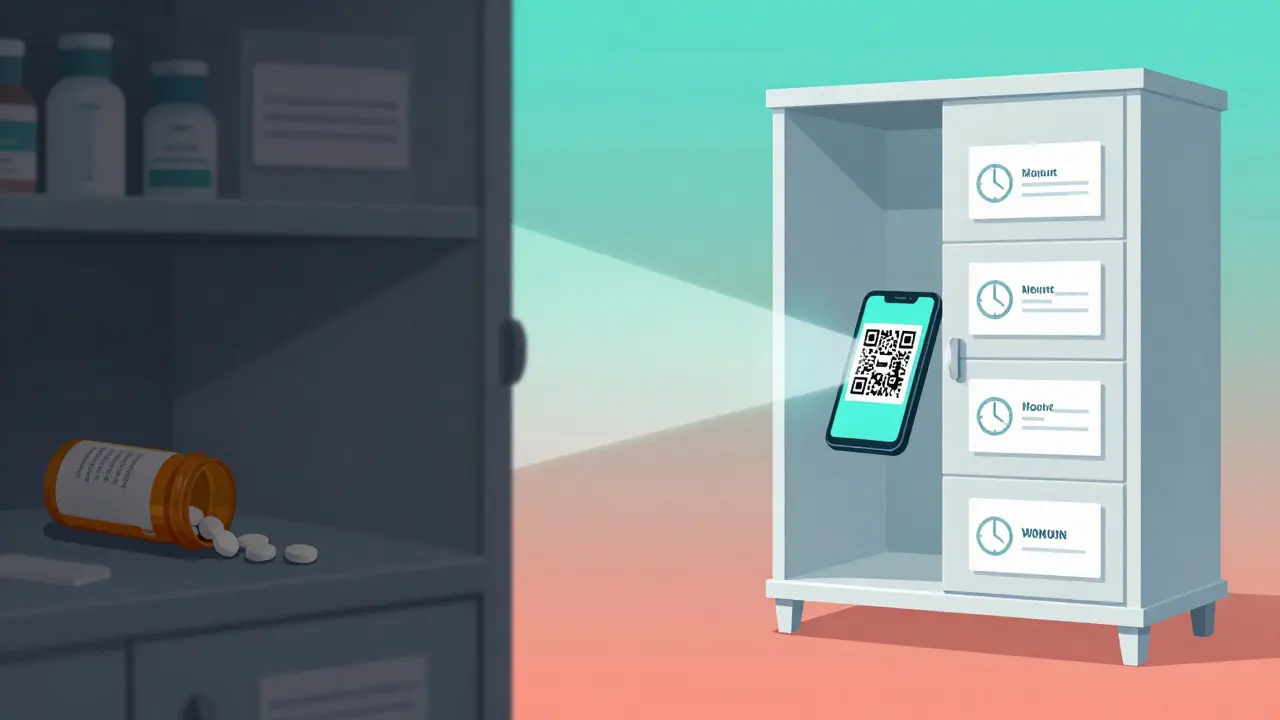
Innovation is coming. Amazon Pharmacy now offers voice-enabled labels. You scan the QR code on the bottle, and a voice says: "Take one pill in the morning and one at night." Early tests showed a 38% drop in errors among seniors. The USP is rolling out QR codes on all labels by January 2025. These will link to simple videos showing how to take the medicine. Mayo Clinic’s pilot program saw a 62% drop in errors. But tech won’t help if you don’t have a smartphone, internet, or vision. It won’t help if the label is printed in tiny font on a dark bottle. And it won’t help if the pharmacist doesn’t have time to explain. The real solution? People. Trained, supported, paid pharmacists who take the time to talk to you.What Needs to Change
We need three things:- Federal standards: The FDA should make USP Chapter <17> mandatory, not optional.
- Pharmacist support: Insurance companies should pay pharmacists for counseling time. Right now, only 14 states require payment for this service.
- Language access: All pharmacies should offer translated labels in the top 10 languages spoken in their area.
Final Thought: Your Life Is on That Label
A prescription label isn’t just a piece of paper. It’s your safety net. It’s your schedule. It’s your health. If it doesn’t make sense, you’re not broken. The system is. Don’t be afraid to ask questions. Don’t assume you got it right. And if you’re ever unsure, call your pharmacist. They’re trained to help. They just need you to speak up.What does "BID" mean on a prescription label?
"BID" stands for "bis in die," which is Latin for "twice a day." But you shouldn’t have to know Latin to take your medicine. Pharmacies should write "take two times a day" instead. If you see "BID," ask the pharmacist to explain when exactly to take it-like "morning and night."
Why do some labels say "take with food" and others say "take on an empty stomach"?
Some medicines work better when they’re absorbed with food, while others can upset your stomach if taken with food. "Take with food" means eat a snack or meal at the same time you take the pill. "Take on an empty stomach" means no food for at least one hour before and after. If you’re unsure, ask your pharmacist to clarify with an example, like "take it before breakfast" or "wait two hours after eating."
I’m 72 and I often forget when to take my pills. What can I do?
Ask your pharmacy for a label with clock icons showing morning and night. Many CVS, Walgreens, and Walmart locations offer this for free. You can also use a pill organizer with labeled compartments. Set phone alarms for each dose. And don’t be afraid to ask your pharmacist to write the times down for you in big letters. They’ve done it for thousands of other seniors.
My prescription label is in Spanish, but I still don’t understand it. Why?
Many translated labels are done with automated tools or poor translations that don’t match how people actually speak. "Tome una pastilla dos veces al día" might be grammatically correct, but it doesn’t tell you when. A good translation says "Tome una pastilla a las 8 de la mañana y otra a las 8 de la noche." Always ask for a verbal explanation in your preferred language, even if the label is translated.
Can I get a larger print version of my prescription label?
Yes. Nearly all major pharmacies-CVS, Walgreens, Walmart-offer large-print labels for free. Just ask when you pick up your prescription. You can also request labels with color-coded sections or symbols for timing. If they say no, ask to speak to the pharmacist. They have the authority to print it.
I took my medicine wrong once. Should I tell my doctor?
Yes. Even if you think it was a small mistake, tell your doctor or pharmacist. They need to know to check for side effects or adjust your plan. Many errors go unreported because people feel embarrassed. But mistakes happen to everyone. The important thing is to learn from them and make sure it doesn’t happen again.
about author

Marian Gilan
so like... are we sure the pharma companies aren't just trying to kill us slowly? like, why would they make labels so confusing? maybe it's intentional? i mean, think about it-more hospital visits = more profits. they don't want you to get better, they want you to keep buying. 🤔
Conor Murphy
this is so real. my grandma took her blood pressure med at night instead of morning for 3 months because the label said 'once daily' and she thought that meant 'whenever you remember'. she's fine now but... we almost lost her. 😔
Conor Flannelly
it's not just about literacy-it's about design. if a label looks like it was printed in 1992 on a dot matrix printer, people assume it's not important. but it's literally their life. we design apps with animations and micro-interactions... but pills? nah. just throw some latin at 'em. 🤷♂️
Patrick Merrell
someone needs to sue the FDA. this is negligence. if you give someone a pill and the instructions are unreadable, it's basically assault. no one should have to be a cryptologist just to survive.
Dan Nichols
you're all missing the point the FDA recommends 6th grade level but most labels are at 8th. that's not a failure its a compromise. people need to learn to read better. also BID is latin and everyone should know latin. its basic education
Renia Pyles
oh please. you think this is about literacy? it's about control. if you can't read your own meds you'll keep going back to the pharmacy. and the pharmacy gets paid. and the pharmacy owns the label printer. and the printer is owned by the same corp that owns the drug. it's all connected. you're being played.
Rakesh Kakkad
In my country, India, we have a similar problem. But we have a solution: the pharmacist stands next to you and explains everything in Hindi, Tamil, or English. Why don't American pharmacies do this? Is it because they are too busy counting money? I am genuinely confused.
Shweta Deshpande
I love how this post ends with 'your life is on that label'-because it really is. I used to ignore labels until my cousin had a reaction because she took her antibiotic with grapefruit juice. Now I write everything down. I even draw little suns and moons next to my meds. It's silly, but it works. 🌞🌙
Robin Van Emous
I work at a small pharmacy. We don't have the budget for ClearView software. We print labels on a 15-year-old machine. I try to explain things verbally, but I'm juggling 10 people at once. It's not that we don't care. We care too much. We're just drowning.
Angie Thompson
OMG YES. I used the GoodRx app on my label last week and it said 'take at bedtime' instead of 'qHS'. I almost cried. I’ve been taking my sleep med at 3am because I thought 'qHS' meant 'when you feel sleepy'. I’m 27 and I thought I was dumb. Turns out the label is the dumb one 😭❤️
rasna saha
I’m a nurse and I’ve seen this too many times. One lady took her insulin before breakfast because the label said 'take with food'-so she thought 'with food' meant 'before you eat'. She ended up in hypoglycemia. We need more visuals. Like, a little drawing of a person eating a sandwich next to the pill. Simple. Human.
Kipper Pickens
The pharmacopeia standards are a great start, but they’re not scalable. You need to consider the pharmacoeconomic impact. The marginal cost of redesigning label templates exceeds the projected reduction in adverse drug events when normalized across the population. We need a risk-adjusted ROI model before mandating.
Mohammed Rizvi
so the solution is to make labels easier... but nobody wants to pay for it. classic. we'll spend millions on a new phone but won't spend $5000 to stop people from dying. capitalism: where profit > life.
eric fert
i mean, sure, labels are confusing... but have you ever thought maybe the problem is that people are too lazy to read? i mean, if you can't figure out 'twice daily' after 3 seconds of looking, maybe you shouldn't be managing your own meds. maybe you should have someone else do it. or maybe you should just die. just saying.
Shawn Raja
the real issue? we treat medicine like it’s a vending machine. you insert your insurance, out comes a pill, and boom-you’re fixed. no human contact. no explanation. no empathy. we’ve turned healing into a transaction. and now we’re surprised when people mess up? please.