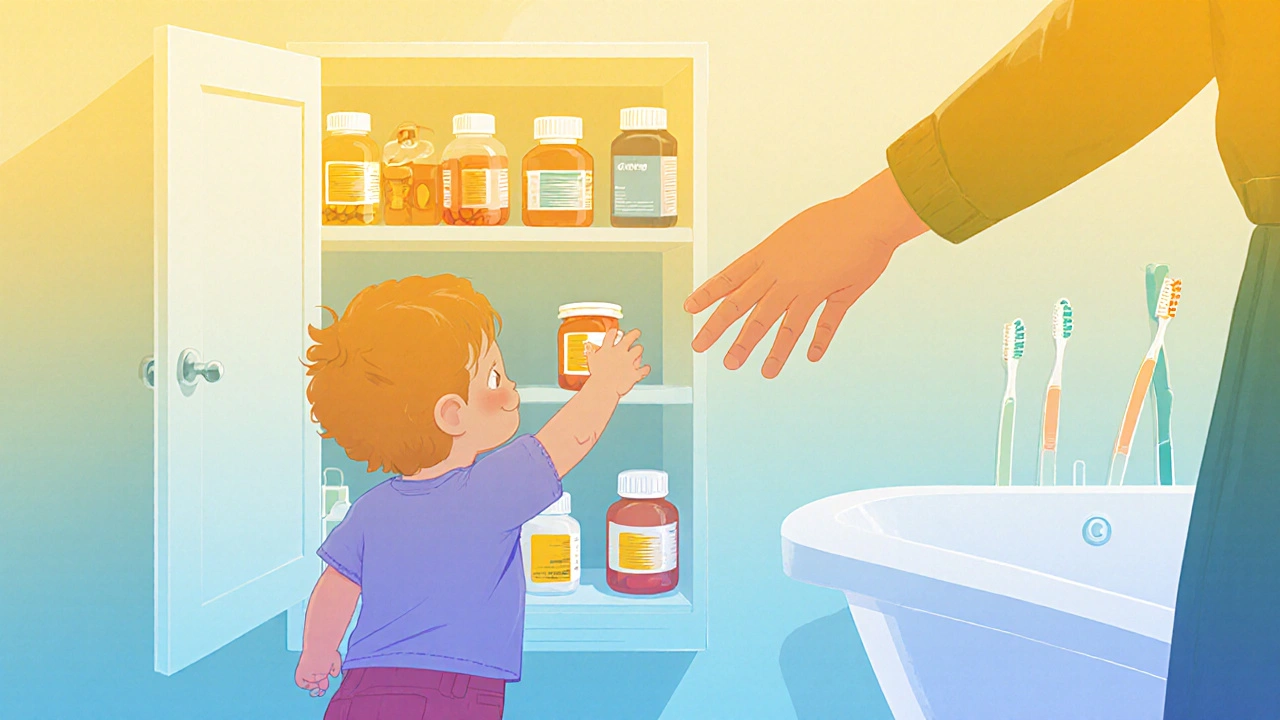
Learn how to store medications safely away from children with proven, expert-backed practices that prevent accidental poisonings. From lockboxes to travel tips, these steps save lives.

When you think about safe medicine storage, the practice of keeping medications in conditions that preserve their strength and prevent accidental access or misuse. Also known as proper drug storage, it’s not just about putting bottles in a cabinet—it’s about protecting your family from poisonings, theft, and ineffective treatments. Every year, over 50,000 children in the U.S. end up in emergency rooms because they got into medications stored improperly. And it’s not just kids—older adults, visitors, or even pets can be at risk if pills are left out in the open.
Childproof medicine, containers designed to resist opening by young children but still accessible to adults. Also known as resistant packaging, it’s a legal requirement for many prescriptions—but it’s not foolproof. Many people leave caps loose or store meds in unsecured drawers, making them easy for curious hands to access. Then there’s counterfeit drugs, fake pills that look real but contain dangerous or inactive ingredients. Also known as fake medications, they often enter homes through online orders or shared prescriptions. Storing medicines in a cool, dry, locked place helps block access to these fakes and keeps your real ones from degrading.
Heat, humidity, and light can ruin pills. Your bathroom medicine cabinet? That’s one of the worst places. Steam from showers and temperature swings can break down active ingredients. A drawer in your bedroom or a locked box in a closet? That’s better. Some meds, like insulin or certain antibiotics, need refrigeration—but never freeze them. Always check the label. And if you’re not using a drug anymore, don’t just toss it in the trash. Flushing or throwing pills away can pollute water and attract scavengers. Use a take-back program or mix them with coffee grounds or cat litter before sealing them in a container.
Safe medicine storage isn’t just about safety—it’s about effectiveness. A degraded pill might not work when you need it most. A stolen opioid could lead to addiction. A fake antibiotic could make an infection worse. That’s why this isn’t a one-time task. Check your stash every few months. Toss expired meds. Keep a list of what’s in your cabinet. Teach everyone in your home where things are—and where they’re not supposed to go.
Below, you’ll find real stories and practical guides on how to handle medication risks—from spotting fake pills to managing side effects and knowing when to call for help. These aren’t theory pieces. They’re what people actually need to stay safe with the drugs they take every day.
Learn how to store medications safely away from children with proven, expert-backed practices that prevent accidental poisonings. From lockboxes to travel tips, these steps save lives.