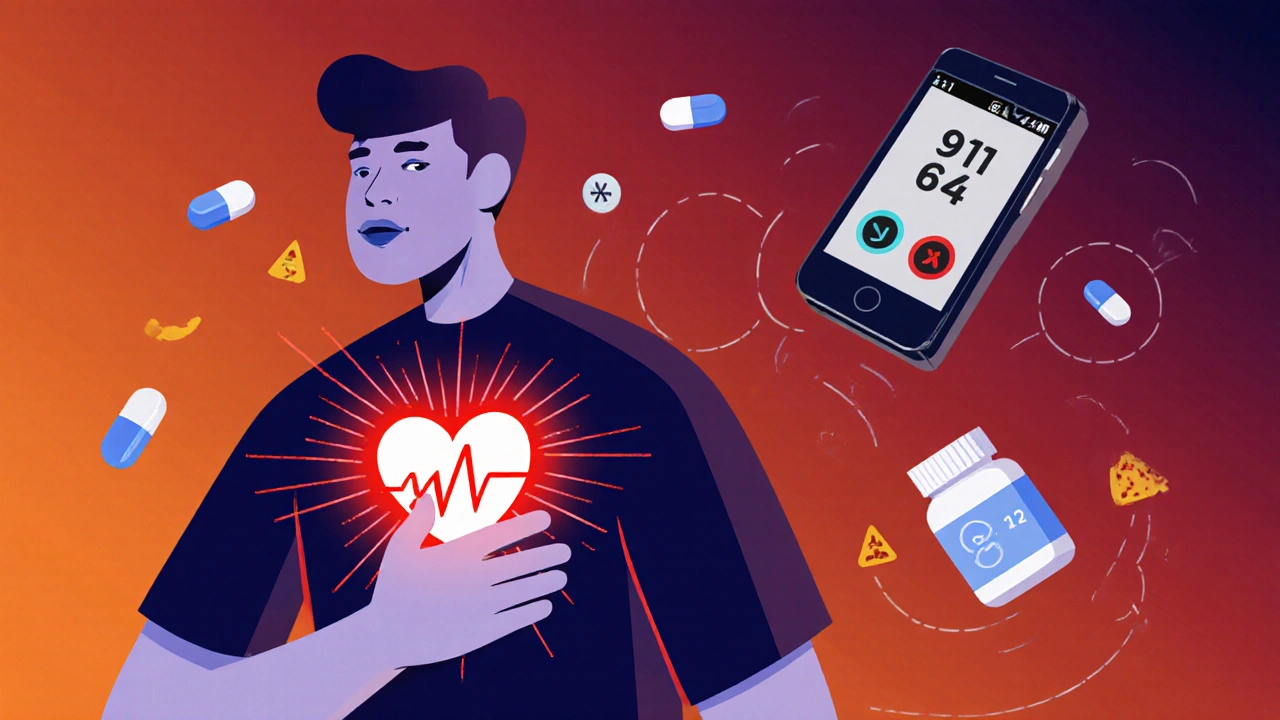
Learn the life-saving red flags that mean you need to go to the ER because of a medication reaction. From anaphylaxis to skin peeling and dangerous drug interactions, know when to act fast.

When a medication emergency, a sudden, dangerous reaction to a drug that requires immediate action. Also known as a drug crisis, it can happen with prescription pills, over-the-counter meds, or even supplements. It’s not always a mistake—sometimes it’s a side effect no one warned you about. Think of steroid-induced psychosis, where a short course of prednisone triggers hallucinations or violent behavior. Or a common cough medicine like guaifenesin causing unexpected bone changes. These aren’t rare. They’re real, and they’re happening right now to people who trusted their meds.
Medication emergencies don’t always look like overdoses. Sometimes it’s a slow burn—like opioid-induced constipation that turns into a bowel blockage, or diuretics causing severe dehydration because you didn’t know to drink more. Other times, it’s sudden: a drug interaction that knocks your heart off rhythm, or a counterfeit pill that looks just like your usual prescription but contains fentanyl. The FDA drug shortage database shows how often supply issues force people to switch meds unexpectedly, increasing the risk of bad reactions. And when your pill changes color or shape because of trademark laws, you might not even realize you’re on a different generic—until your body reacts.
What ties these together? Awareness. Knowing which drugs can mess with your smell, your bladder, or your mind isn’t just useful—it’s lifesaving. Steroid-induced psychosis, for example, can be reversed if caught early with antipsychotics and a careful taper. Reporting a fake pill through MedWatch stops others from getting poisoned. Checking the FDA shortage list before filling a prescription keeps you from running out mid-treatment. These aren’t theoretical concerns. They’re daily realities for people managing chronic pain, mental health, or kidney disease.
You don’t need to be a doctor to spot trouble. If your vision blurs after starting a new antidepressant, if you can’t stop urinating after taking an OTC cold med, or if your loved one suddenly acts completely out of character on steroids—these are red flags. The posts below give you step-by-step ways to respond: how to report dangerous drugs, how to switch meds safely without withdrawal, how to tell if your pill is fake, and what to do when a side effect turns life-threatening. This isn’t about fear. It’s about control. You’re not helpless. You just need the right info—fast.
Learn the life-saving red flags that mean you need to go to the ER because of a medication reaction. From anaphylaxis to skin peeling and dangerous drug interactions, know when to act fast.