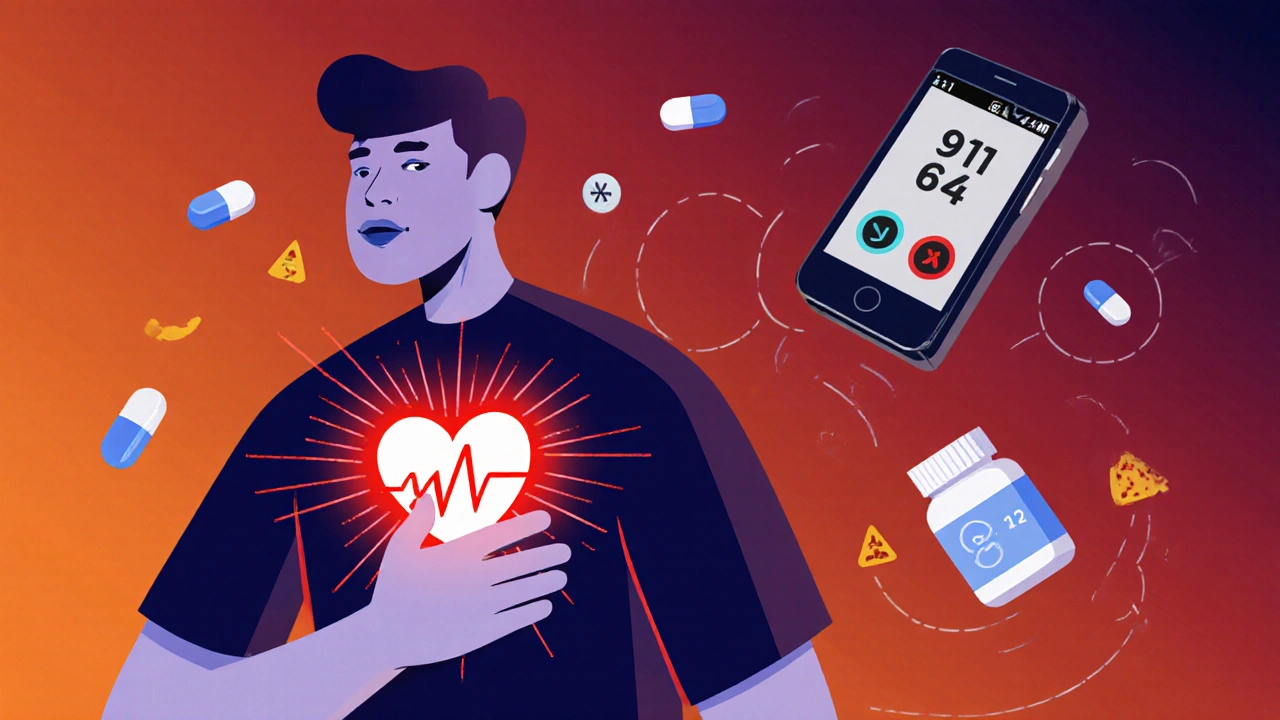
Learn the life-saving red flags that mean you need to go to the ER because of a medication reaction. From anaphylaxis to skin peeling and dangerous drug interactions, know when to act fast.

When you take a drug side effect, an unintended reaction to a medication that isn’t the intended therapeutic outcome. Also known as adverse drug reactions, these can range from mild annoyances like dry mouth to serious issues like liver damage or heart rhythm problems. Almost every medication has them—even the ones you think are harmless. The question isn’t whether you’ll get one, but which one, how bad it’ll be, and what you can do about it.
Medication side effects, the body’s response to a drug’s chemical action beyond its intended use happen because drugs don’t just target one system. A pill for your blood pressure might also slow your digestion. An antidepressant might help your mood but make you gain weight or feel dizzy. That’s not a mistake—it’s biology. Your body doesn’t know which receptor is "the right one" to hit. It reacts to everything the drug touches. That’s why some people get headaches from a drug while others feel fine. Genetics, age, other meds, even what you ate that day can change how your body handles it.
Not all side effects are equal. Some are annoying but harmless—like a dry throat from an antihistamine. Others are red flags. If you suddenly feel confused, have chest pain, swelling in your face, or your skin turns yellow, don’t wait. These aren’t just side effects—they’re warnings. The drug safety, the system of monitoring, reporting, and managing risks from medications to protect public health exists because these reactions can kill. That’s why tools like MedWatch matter. If you notice something strange, report it. You’re not just helping yourself—you’re helping others avoid the same problem.
Managing side effect management, the process of reducing or preventing unwanted reactions while keeping the benefits of a medication isn’t about quitting your meds. It’s about working smarter. Sometimes a lower dose helps. Sometimes switching to a different drug in the same class cuts the problem. Sometimes adding another pill—like a stomach protector with an NSAID—makes all the difference. The key is knowing what’s normal and what’s not. And knowing when to talk to your doctor before it turns into an emergency.
Below, you’ll find real-world guides on the most common and concerning reactions—from drowsiness and bladder issues to smell changes and psychosis. These aren’t theory. These are stories from people who lived through it, and the doctors who helped them get back on track. Whether you’re dealing with a new prescription or have been on the same meds for years, you’ll find something here that applies to you. No fluff. No jargon. Just what you need to know to stay safe and in control.
Learn the life-saving red flags that mean you need to go to the ER because of a medication reaction. From anaphylaxis to skin peeling and dangerous drug interactions, know when to act fast.