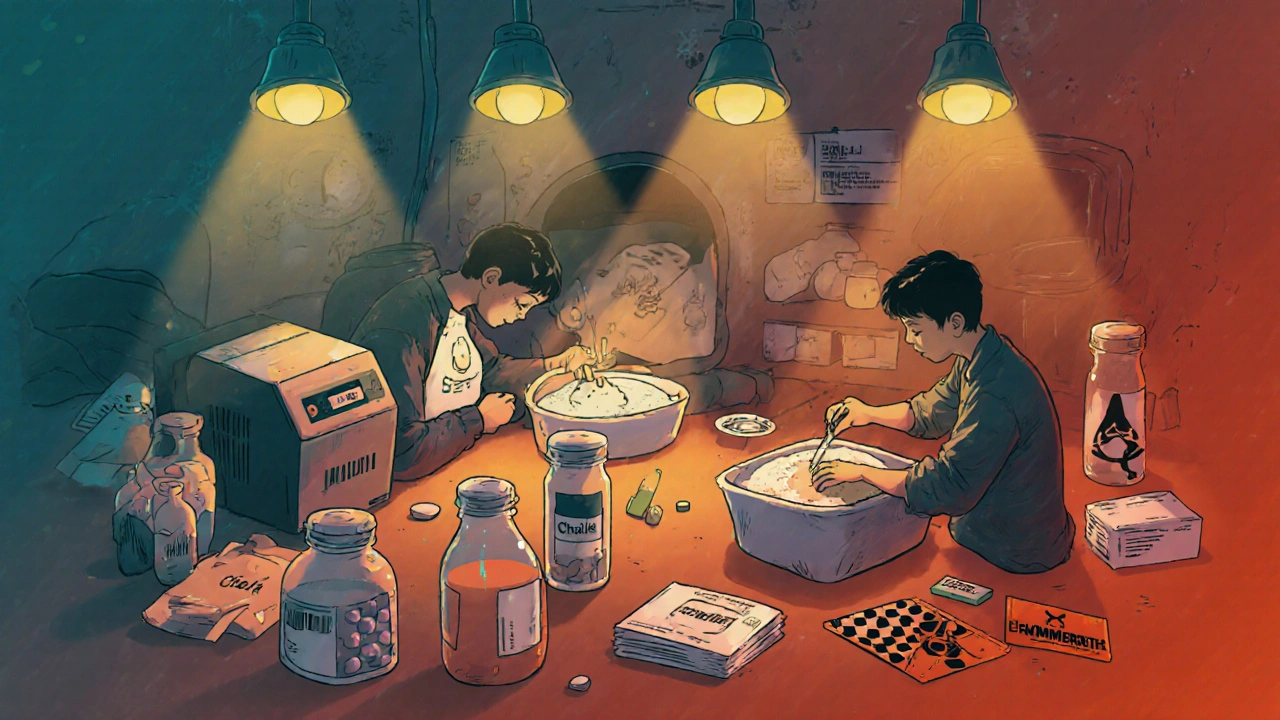
Fake generic drugs are a growing global threat, slipping into supply chains through loopholes, grey markets, and online pharmacies. Learn how they're made, where they come from, and how to protect yourself.

When you take a pill, you expect it to do what it says on the label. But counterfeit medications, fake drugs that mimic real prescriptions but contain wrong or dangerous ingredients. Also known as fake drugs, they can have no active ingredient, too much of it, or even rat poison, chalk, or floor cleaner mixed in. These aren’t rare outliers—they’re a global problem. The WHO estimates that 1 in 10 medical products in low- and middle-income countries are substandard or falsified. Even in the U.S., counterfeit pills are flooding the market, especially fake opioids like oxycodone and fentanyl disguised as legitimate painkillers.
It’s not just about getting ripped off. counterfeit medications, fake drugs that mimic real prescriptions but contain wrong or dangerous ingredients. Also known as fake drugs, they can have no active ingredient, too much of it, or even rat poison, chalk, or floor cleaner mixed in. are killing people. A 2023 CDC report linked over 70,000 overdose deaths to fake pills laced with fentanyl. And it’s not just opioids. Fake antibiotics, diabetes meds, blood pressure pills, and even cancer drugs are out there. You might buy them online from a site that looks legit, get them from a friend, or even pick them up at a pharmacy that’s been compromised. MedWatch, the FDA’s official system for reporting adverse events and product problems. Also known as drug safety reporting, it’s the fastest way to alert authorities when you find a fake pill. Reporting isn’t just helpful—it’s necessary. One report can stop a batch from reaching more people.
Knowing what to look for helps. Check the packaging for misspellings, poor print quality, or mismatched colors. Compare your pill to images online from the manufacturer. If it looks different from your last refill—especially if you didn’t switch pharmacies—it could be fake. Don’t assume generics are dangerous just because they look different. That’s normal. But if the shape, size, color, or imprint doesn’t match your usual meds, call your pharmacist. And if you feel weird after taking a pill—dizziness, nausea, sudden weakness—stop taking it and save the pill. That’s evidence.
Every post here is built around real dangers and real solutions. You’ll find step-by-step guides on how to report fake drugs to the FDA or DEA, how to tell if your meds are tampered with, and what to do if you think you’ve taken a counterfeit. We cover how to check drug authenticity, what red flags to watch for when ordering online, and how to protect your family from the growing tide of fake pills. This isn’t theory. It’s survival info. And it’s all based on what patients and providers are actually seeing in the field.
Fake generic drugs are a growing global threat, slipping into supply chains through loopholes, grey markets, and online pharmacies. Learn how they're made, where they come from, and how to protect yourself.