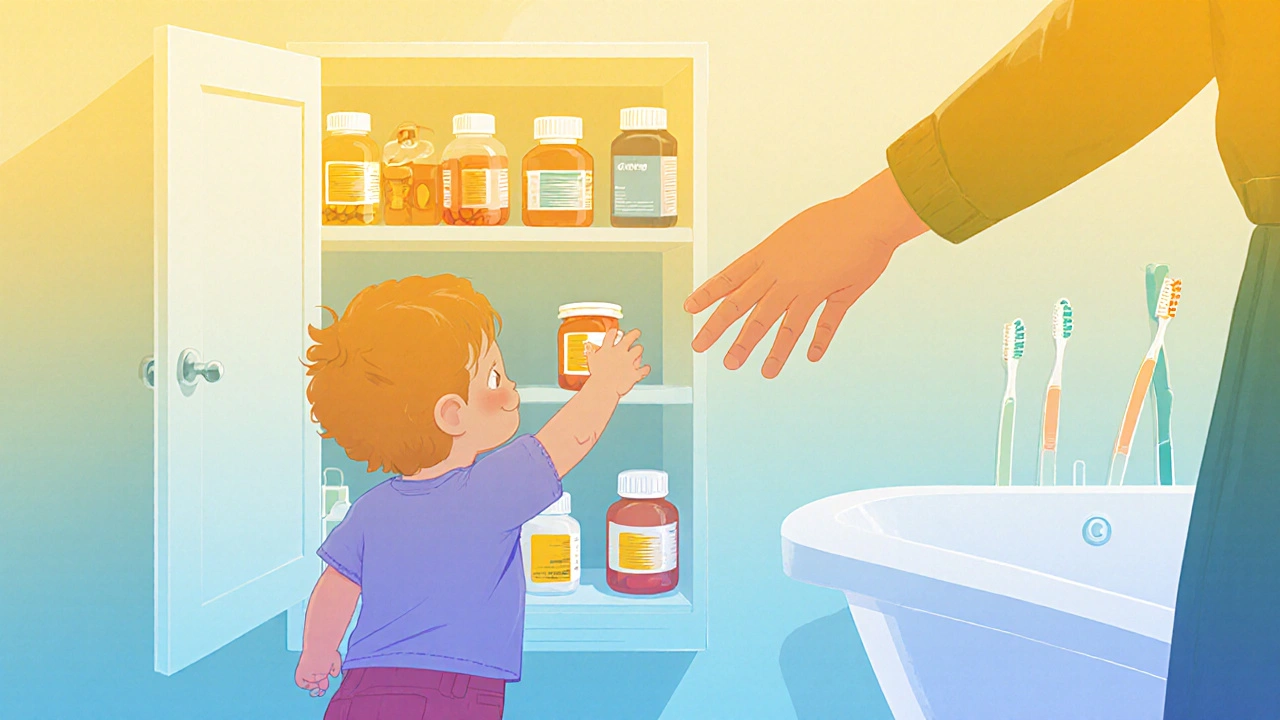
Learn how to store medications safely away from children with proven, expert-backed practices that prevent accidental poisonings. From lockboxes to travel tips, these steps save lives.

When you store pills, liquids, or patches where a child can reach them, you’re not just being careless—you’re risking a trip to the ER. Child-proof storage, a system of physical barriers and secure containers designed to prevent young children from accessing hazardous substances. Also known as child-resistant packaging, it’s not just a suggestion—it’s a lifesaving standard built into most prescription and OTC meds in the U.S. and EU. But here’s the problem: most parents think ‘child-proof’ means ‘kid-proof.’ It doesn’t. A 2022 study from the CDC found that over 60,000 children under six end up in emergency rooms every year after getting into medications—even when they were stored in ‘child-resistant’ containers. Why? Because kids learn fast. They watch. They copy. And if your bottle sits on the counter, inside an open cabinet, or on a low shelf near toys, it’s not safe.
Child-resistant packaging, a regulatory standard requiring caps and closures that are difficult for children under five to open. Also known as tamper-evident packaging, it’s designed to slow down a child long enough for an adult to intervene—not to stop them forever. That’s why the real defense isn’t the cap—it’s where you put the whole thing. The American Academy of Pediatrics says the safest place is high up, locked away, and out of sight—like a cabinet with a safety latch, not just a high shelf. And don’t forget: vitamins, nicotine patches, eye drops, and even topical creams can be deadly in small amounts. A single dose of adult-strength ibuprofen can cause organ damage in a toddler. A few drops of liquid morphine? That’s a death sentence.
Many families think they’re safe because they’ve never had an incident. But accidents don’t come with warning signs. They happen in seconds—when Grandma visits and leaves her pills on the nightstand, when a sibling finds the medicine bag in the backpack, or when a curious toddler climbs onto the toilet seat to reach the bathroom cabinet. Pediatric poisoning, the unintentional ingestion of harmful substances by children under six. Also known as medication overdose in kids, it’s the leading cause of preventable injury in young children. And it’s not rare. Every 30 seconds, a child in the U.S. is exposed to a dangerous medication. You can’t rely on luck. You need systems.
Look at the posts below. You’ll find real advice on how to handle medication storage after a hospital discharge, how to spot fake pills that look like candy, what to do when your child swallows something they shouldn’t, and how to report dangerous packaging failures to the FDA. These aren’t hypotheticals. These are stories from real parents, caregivers, and pharmacists who’ve been there. You don’t need to wait for an emergency to act. Start today. Lock it up. Keep it high. And never assume ‘it won’t happen to me.’ It already has—to someone you know.
Learn how to store medications safely away from children with proven, expert-backed practices that prevent accidental poisonings. From lockboxes to travel tips, these steps save lives.