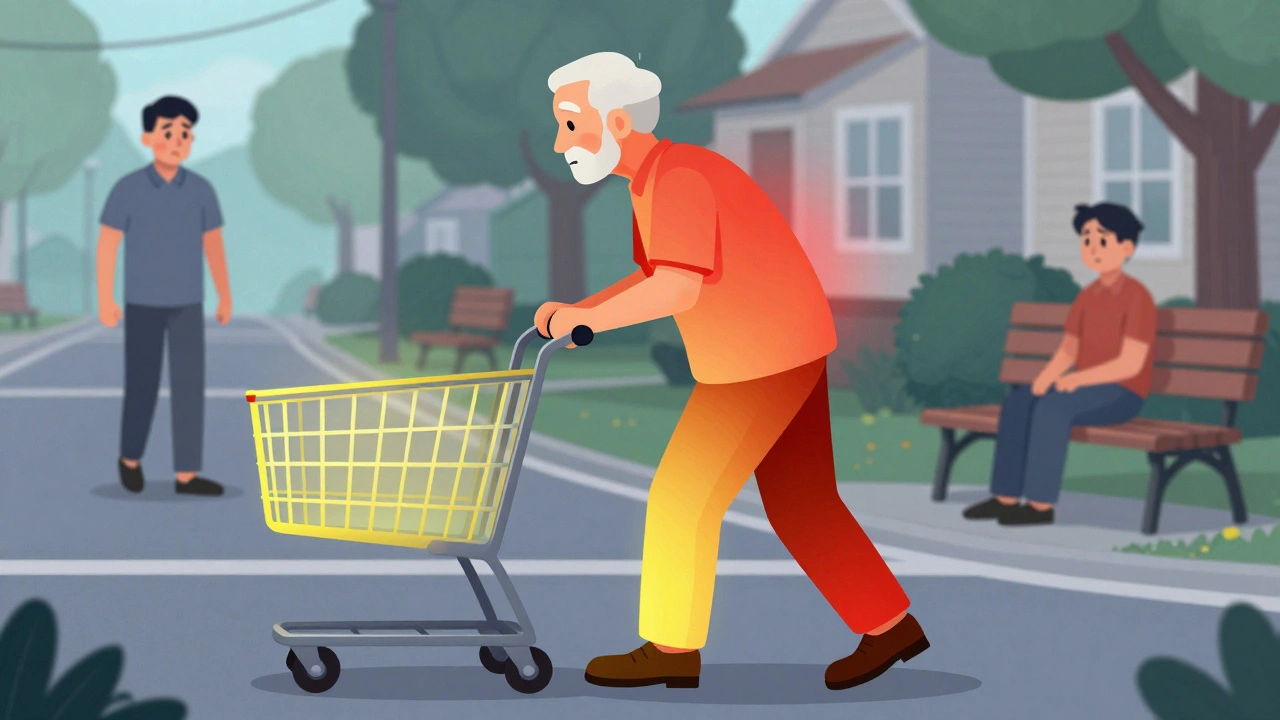
Neurogenic claudication is leg pain caused by spinal stenosis that worsens with walking and improves when bending forward. Learn how to recognize it, avoid misdiagnosis, and choose effective treatments-from exercise to surgery.

When you walk and your legs start aching, cramping, or going numb—only to feel better when you sit down—you might be dealing with neurogenic claudication, a condition caused by nerve compression in the lower spine that mimics muscle fatigue but has a neurological root. Also known as spinal claudication, it’s not a muscle problem. It’s your nerves screaming for space. This isn’t just old age catching up. It’s often tied to spinal stenosis, a narrowing of the spinal canal that squeezes the nerves as they exit the lumbar spine, and it affects over 20% of adults over 60. Unlike regular muscle soreness, the pain comes on predictably after walking a certain distance, then vanishes within minutes of resting. That’s the hallmark.
What makes neurogenic claudication tricky is that it looks a lot like poor circulation. But if your toes are warm and your pulses are strong, it’s not your arteries—it’s your spine. The compression usually happens in the lumbar spine, the lower back region where nerves for the legs branch out. Things like bone spurs, thickened ligaments, or slipped discs press on those nerves, especially when you stand or walk. Leaning forward—like pushing a shopping cart—often eases the pain because it opens up the spinal canal. That’s why people with this condition find relief bending over, but not sitting straight.
Diagnosis isn’t guesswork. Doctors use MRI or CT scans to see the exact spot where nerves are pinched. Nerve conduction tests can rule out other causes like peripheral neuropathy. Treatment starts simple: physical therapy to strengthen your core, weight management to reduce pressure, and activity modification. Many people avoid surgery entirely by using epidural steroid injections to calm inflammation. If pain keeps you from walking, even short distances, then it’s time to talk about decompression procedures—minimally invasive options that create more room for nerves without major spine fusion.
What you’ll find in the posts below isn’t just theory. It’s real-world advice from people who’ve lived with this, and from experts who’ve treated it. You’ll see how medications for nerve pain compare, what lifestyle tweaks actually help, and how to tell if your symptoms are something else entirely. No fluff. No jargon. Just what works—and what doesn’t—when your legs refuse to cooperate.
Neurogenic claudication is leg pain caused by spinal stenosis that worsens with walking and improves when bending forward. Learn how to recognize it, avoid misdiagnosis, and choose effective treatments-from exercise to surgery.