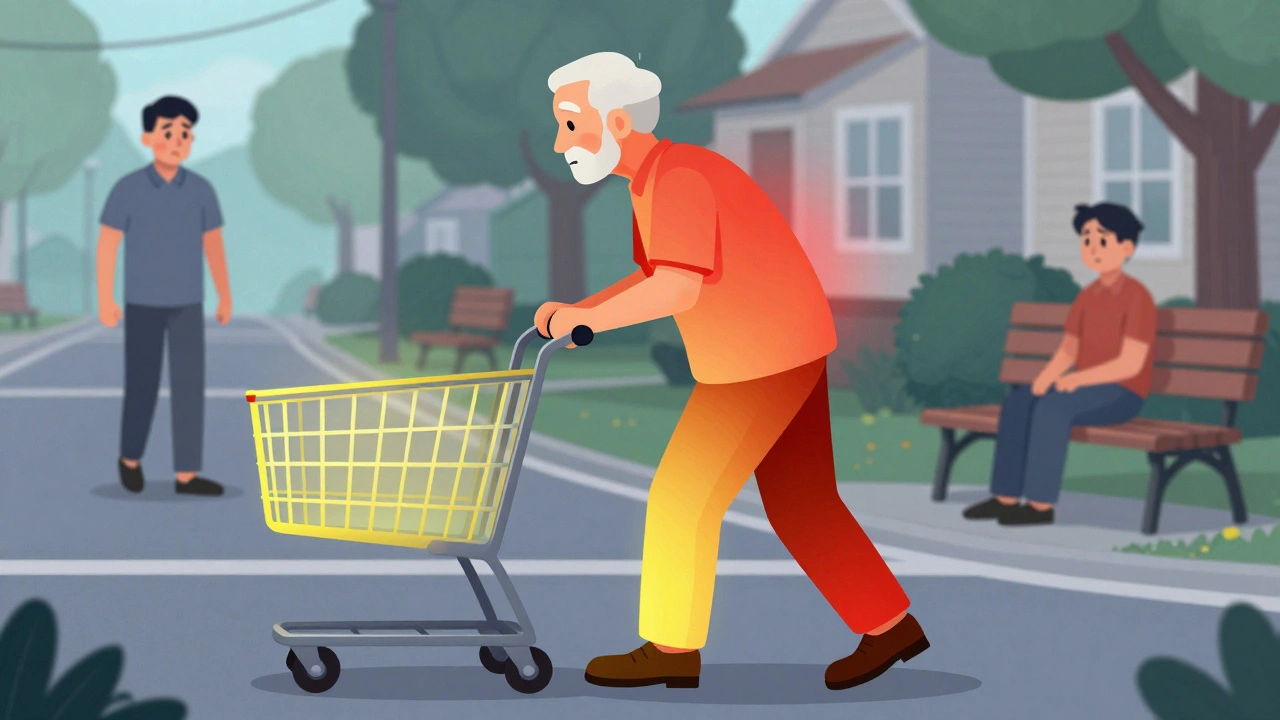
Neurogenic claudication is leg pain caused by spinal stenosis that worsens with walking and improves when bending forward. Learn how to recognize it, avoid misdiagnosis, and choose effective treatments-from exercise to surgery.

When you feel leg pain when walking, a symptom often linked to reduced blood flow or nerve pressure that makes movement difficult. Also known as claudication, it's not just tired muscles—it's a warning sign your body can't ignore. If your legs ache, cramp, or burn after just a few blocks, something deeper is going on. This isn’t normal aging. It’s often peripheral artery disease, a condition where plaque builds up in arteries supplying your legs, cutting off oxygen. Studies show over 8 million Americans have this, and most don’t realize it until the pain forces them to stop.
But leg pain when walking isn’t always from blocked arteries. It can also come from nerve compression, like spinal stenosis, where narrowed spaces in your spine press on nerves that run down to your legs. Or it could be simple muscle cramps, triggered by dehydration, low electrolytes, or overuse. Even certain medications—like statins or diuretics—can cause leg discomfort as a side effect. The key is knowing which one you’re dealing with. Pain that goes away after resting? Likely vascular. Pain that shoots down your back into your thigh? Probably nerve-related. A burning feeling that gets worse at night? Could be diabetes or nerve damage.
What you do next matters. Ignoring it won’t make it better. Getting checked isn’t just about easing discomfort—it’s about preventing serious complications like tissue damage or even amputation in severe cases. Doctors use simple tests—ankle-brachial index, ultrasound, or walking stress tests—to find the root cause. Treatment isn’t one-size-fits-all. Some people need daily walks to build new blood vessels. Others need medication to thin blood or lower cholesterol. A few require surgery to open blocked arteries. And for nerve-related pain, physical therapy or spine adjustments can make a huge difference.
You don’t have to live with this pain. Many people feel better after making small changes: walking a little more each day, quitting smoking, controlling blood sugar, or adjusting meds under a doctor’s care. The posts below give you real, practical insights—from how certain drugs worsen leg pain to what tests actually show up on scans. You’ll find clear advice on when to push through discomfort and when to get help fast. No fluff. No guesswork. Just what works.
Neurogenic claudication is leg pain caused by spinal stenosis that worsens with walking and improves when bending forward. Learn how to recognize it, avoid misdiagnosis, and choose effective treatments-from exercise to surgery.