
UK Substitution Laws: How NHS Policies on Generic Medicines and Care Shifts Are Changing Healthcare
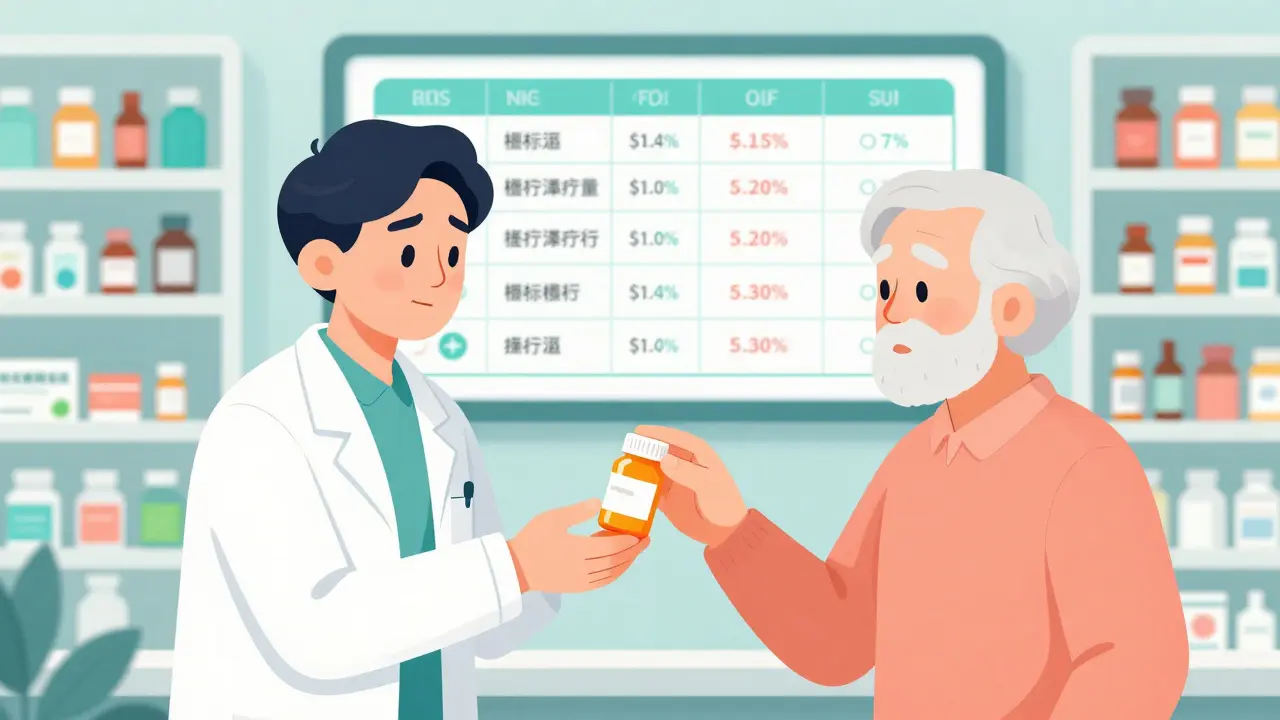
When you pick up a prescription at your local pharmacy in the UK, you might not realize that the medicine you’re handed isn’t always the one your doctor wrote on the slip. That’s because of pharmaceutical substitution - a long-standing NHS practice that lets pharmacists swap branded drugs for cheaper, equally effective generics. But in 2025, the rules changed. Not just for pills. For entire services. The NHS is now shifting care from hospitals to homes, from face-to-face visits to digital platforms, and from traditional staffing models to remote systems. These aren’t minor tweaks. They’re a full-scale rewrite of how healthcare works in England.
What Pharmaceutical Substitution Actually Means
Pharmaceutical substitution isn’t new. Since the 2013 NHS Pharmaceutical Services Regulations, pharmacists have been allowed to replace a branded medication with a generic version - unless the doctor specifically wrote ‘dispense as written’ (DAW) on the prescription. That’s it. No extra paperwork. No patient approval needed. The law assumes generics are safe, effective, and cost-saving. And they are. Most generics are chemically identical to their branded cousins, just sold without the marketing budget.
In 2024, about 83% of eligible prescriptions in the UK were filled with generics. By 2025, that number jumped to 90%. The Department of Health and Social Care pushed for this. Why? Because branded drugs like Lipitor or Nexium cost up to 10 times more than their generic versions. Every time a pharmacist substitutes, the NHS saves money - and those savings help fund other services.
But here’s the catch: not all patients react the same way. Some report side effects after switching - not because the medicine is different, but because they’re sensitive to inactive ingredients like dyes or fillers. Others simply trust the brand name. That’s why doctors can still block substitution with DAW. But in practice, fewer and fewer do. The pressure to cut costs is too strong.
The Big Shift: From Hospitals to Homes
While generic pills were the first wave of substitution, the 2025 NHS reforms introduced something bigger: service substitution. This means replacing hospital visits with care delivered in your living room, your GP’s office, or through a video call.
The government’s 2025 mandate to NHS England was clear: move care ‘from hospital to community, sickness to prevention, and analogue to digital.’ That’s not just a slogan. It’s a budget-driven strategy. The NHS is spending £1.8 billion in 2025-26 to build community diagnostic hubs, virtual fracture clinics, and remote monitoring systems. The goal? Cut emergency hospital admissions for people over 65 by 15% by 2027.
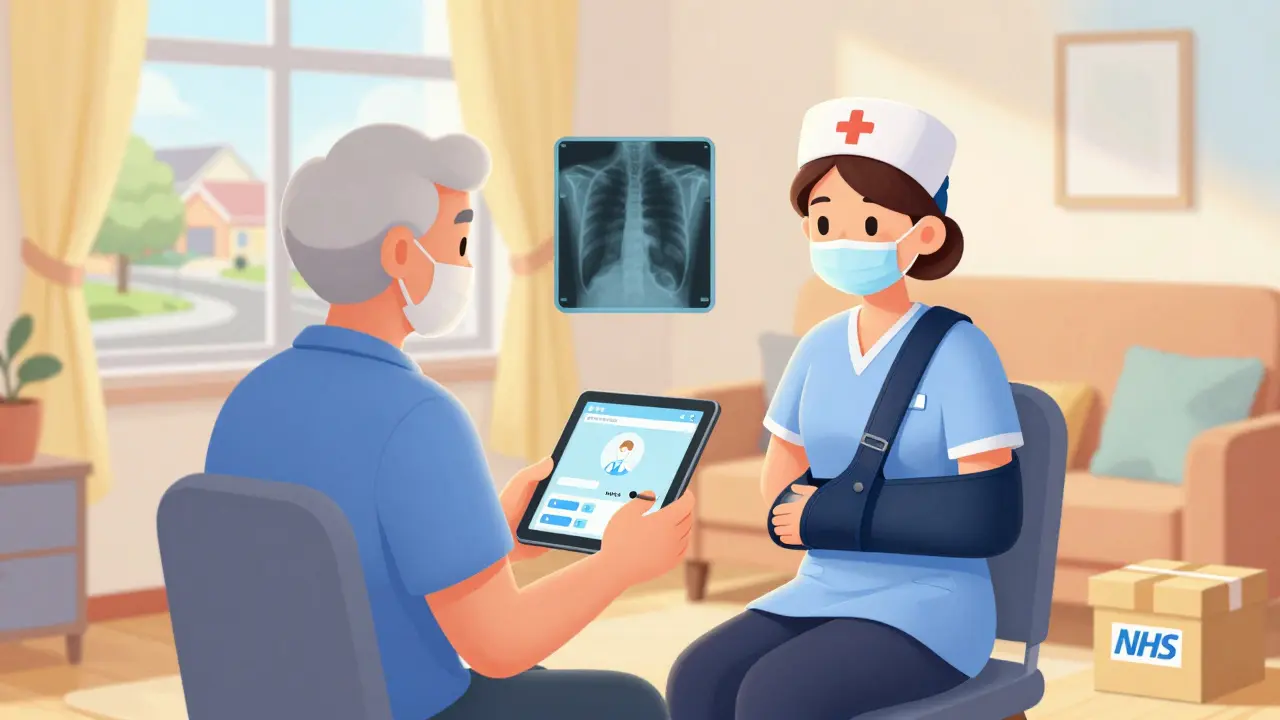
Take fracture clinics. Before 2025, if you broke your wrist, you’d go to A&E, get an X-ray, wait hours, see a specialist, and come back in two weeks. Now, many patients get a digital triage first. A nurse reviews your X-ray remotely. If it’s a simple break, you’re sent home with a sling and a video follow-up. A Manchester Royal Infirmary nurse reported a 40% drop in unnecessary visits. But 15% of elderly patients struggled - no smartphone, no Wi-Fi, no family to help. That’s the trade-off.
Remote Pharmacies and the Digital Switch
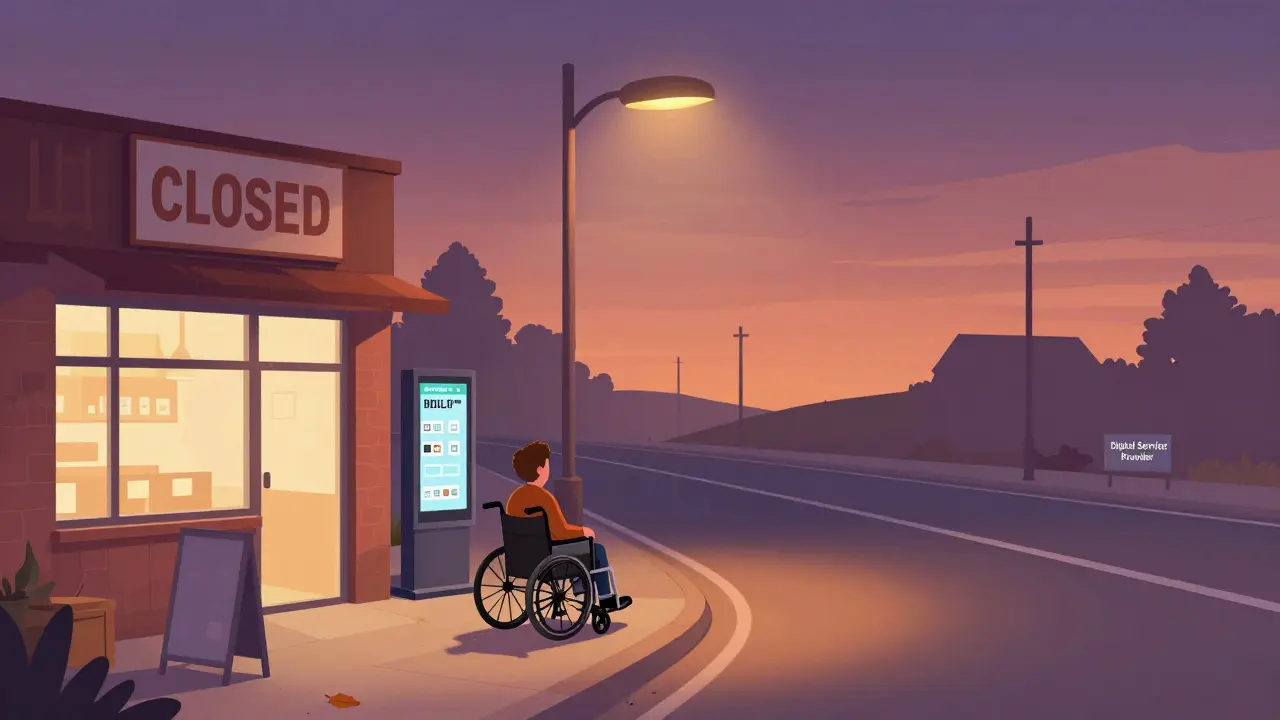
One of the most controversial changes came with the Human Medicines (Amendment) Regulations 2025. Starting October 1, 2025, all new NHS pharmaceutical service providers - called Digital Service Providers (DSPs) - must deliver prescriptions remotely. No more walking into a pharmacy to pick up your meds. Instead, you’ll order online, and your medicine will be sent to you by courier or collected from a designated kiosk.
Pharmacies already on the list can keep their doors open for now. But new ones? They can’t even open a physical shop without jumping through new, stricter market entry tests. The idea is to reduce costs and increase efficiency. But the reality? Most community pharmacies aren’t ready.
A British Pharmaceutical Industry survey found 79% of pharmacies are worried. Half say they need between £75,000 and £120,000 to upgrade their tech - software, delivery systems, cybersecurity, staff training. Many are small, family-run businesses. They can’t afford that. Some are already closing. In rural Wales and northern England, where pharmacies are already scarce, the fear is real: patients will lose access.
Who’s Getting Left Behind?
It’s easy to say ‘digital is the future.’ But not everyone can click ‘order’ on a website. The NHS Staff Survey 2025 showed 78% of hospital pharmacists are concerned about medication safety in remote systems. Errors can happen - wrong dosage, mislabeled packages, delayed deliveries. And the most vulnerable? Elderly patients, those with dementia, people with low digital literacy, and those in poverty.
King’s Fund warned that without fixing the 28,000-worker shortfall in community services, substitution could widen health inequalities by 12-18% in deprived areas. In Greater Manchester, early substitution programs actually made gaps worse before targeted support was added. One woman in Bradford told a local paper: ‘I’ve been on the same heart medication for 12 years. Now they send me a new one I’ve never seen before, with no one to explain it. I’m scared to take it.’
Meanwhile, public health services are also being reshuffled. National immunisation programs, child health screenings, and sexual assault services are now under NHS England’s direct control. That means these services can be moved, merged, or replaced - sometimes without local input. Community health workers say they’re being asked to do more with less. And they’re burnt out.
Is This Working?
There are wins. Professor Sir Chris Whitty, the Chief Medical Officer, says shifting 30% of hospital outpatient appointments to community settings could clear 1.2 million appointments off waiting lists by 2028. That’s huge. And the NHS has already saved £1.1 billion in 2024-25 just from higher generic use.
But the data is mixed. NHS Confederation found 68% of Integrated Care Boards don’t have enough staff to handle the shift to community care. Rural areas are especially struggling. And the 2025 reforms removed tax exemptions for certain travel and charge refunds - meaning some patients now pay more just to get their meds.
The 10-Year Health Plan predicts a £4.2 billion savings by 2030 if substitution is done right. But the Nuffield Trust warns: if systems break down, costs could rise by 7-10% due to repeat visits, errors, and fragmented care.
What This Means for You
If you’re on long-term medication, expect to get generics more often. If you’re over 65, you might start getting virtual check-ups instead of hospital visits. If you live in a city, you’ll probably notice more community diagnostic hubs popping up near your local supermarket. But if you live in a village with no internet or public transport, you might find it harder to get care.
Here’s what you can do:
- Ask your pharmacist if your prescription can be switched to a generic - and if you’re okay with it.
- If your doctor hasn’t written ‘dispense as written,’ you can request it - but be ready to explain why.
- For digital services: ask if you can still have a face-to-face option. You have the right to request it.
- If you’re struggling with delivery or tech, tell your GP or local council. There are support schemes, but you have to ask.
The NHS isn’t broken. But it’s being rebuilt under pressure. The goal is a healthier, cheaper, more sustainable system. But if the human side gets ignored - the elderly, the lonely, the digitally excluded - then the savings will come at a cost we can’t afford.
What’s Next?
The Carr-Hill formula, changing in April 2026, will start directing more funding to areas with the worst health and economic challenges. That could help. But it won’t fix the workforce crisis overnight. The NHS needs 15,000 more community health workers by 2030. Where will they come from? And who will train them?
The next five years will show whether substitution is a smart reform - or a rushed experiment. One thing’s clear: healthcare in the UK won’t look the same in 2030. The question is: will it be better for everyone?”
Can my pharmacist change my medicine without asking me?
Yes, if your doctor didn’t write ‘dispense as written’ (DAW) on the prescription. Pharmacists in the UK are allowed to substitute branded drugs with cheaper generic versions by law. They don’t need your permission - but they should tell you what they’re changing it to. If you’re uncomfortable, you can ask for the original brand or request your doctor adds DAW to future prescriptions.
Are generic medicines as safe as branded ones?
Yes. Generic medicines must meet the same strict quality and safety standards as branded drugs in the UK. They contain the same active ingredient, in the same strength and form. The only differences are in inactive ingredients like fillers or dyes - which rarely cause issues. If you notice new side effects after switching, tell your pharmacist or doctor. It could be a reaction to an inactive ingredient, not the medicine itself.
What’s the difference between pharmaceutical substitution and service substitution?
Pharmaceutical substitution means swapping one medicine for another - like switching from a branded pill to its generic version. Service substitution means replacing where or how care is delivered - like moving a hospital appointment to a virtual visit, or a blood test from a clinic to a community diagnostic hub. One changes the drug. The other changes the care setting.
Can I still pick up my prescription from the pharmacy in person?
Yes - for now. The 2025 rules only require new NHS pharmaceutical providers to deliver services remotely. Existing pharmacies can still offer face-to-face collection. But if you’re using a new Digital Service Provider (DSP), you’ll likely need to order online and get your medicine delivered or picked up from a kiosk. Always check with your pharmacy about their current options.
Why is the NHS pushing for more substitution?
The NHS is under financial pressure. Generic medicines cost far less than branded ones - saving billions. Moving care from expensive hospitals to community settings reduces overhead and frees up beds. The goal is to make the system sustainable. The 2025 reforms aim to cut waiting lists, reduce emergency admissions, and save £4.2 billion by 2030. But success depends on proper funding, staffing, and support for patients who struggle with change.
For patients, the message is simple: know your rights. Ask questions. Don’t assume a change is automatic. And if something feels wrong - speak up. The system is changing fast. But your voice still matters.
about author

Steve Hesketh
Man, I’ve seen this play out in Lagos too - folks getting generic meds and freaking out because the pill looks different. But here’s the thing: if it works, it works. The NHS is trying to keep the lights on while keeping people alive. I get the fear, but let’s not throw the baby out with the bathwater. We need innovation, not nostalgia.
shubham rathee
so the government is secretly replacing our meds with chinese generics and tracking us through delivery kiosks right? i mean why else would they push digital so hard? they dont care about old people they just want to save money and watch us suffer lol
MAHENDRA MEGHWAL
While the intent behind pharmaceutical and service substitution is commendable from a fiscal and systemic efficiency standpoint, the implementation lacks adequate safeguards for vulnerable populations. The absence of mandatory patient consent, coupled with insufficient infrastructure in rural and digitally isolated communities, risks exacerbating health disparities rather than mitigating them. A policy grounded in equity must precede one driven solely by cost.
Sangeeta Isaac
so like… the NHS is basically turning into a Walmart pharmacy with a side of Zoom doctor? 🤡 i mean i get the savings, but now my grandma has to video call a nurse who’s probably on her third coffee to tell her why her heart pill looks like a tiny green dinosaur? and she still has to walk 2 miles to the ‘kiosk’ that only opens on tuesdays? bruh.
Alex Carletti Gouvea
This is what happens when you let bureaucrats run healthcare. In America, we don’t let some pharmacist swap your medicine without asking. We don’t replace human care with apps. This isn’t progress - it’s surrender. The NHS used to be a symbol of dignity. Now it’s a cost-cutting spreadsheet.
Uju Megafu
OH MY GOD. They’re replacing REAL DOCTORS with robots and sending your pills in the mail like you’re ordering cat litter? And you’re supposed to be GRATEFUL? My aunt got a new generic that made her hallucinate for three days and NO ONE TOLD HER THE FILLERS WERE DIFFERENT. THIS IS A CRIME. THE NHS IS ABANDONING THE ELDERLY AND CALLING IT ‘INNOVATION.’
lokesh prasanth
substitution is just capitalism wearing a stethoscope
MARILYN ONEILL
Wow. So now we’re just shipping pills like Amazon packages? And you’re supposed to be okay with that? I mean, really? My dermatologist spent 45 minutes explaining my cream. Now I get a box with a QR code and a ‘thank you for choosing efficiency’ note? I’m not a robot. I’m a person who needs to be heard.
Coral Bosley
I’ve been on the same blood pressure med for 15 years. Last month, they switched it without warning. I felt dizzy for a week. No one called. No one asked. I cried in the pharmacy aisle because I didn’t know if I was dying or just being ignored. Now they want me to trust an app? I don’t trust the system anymore. And I’m not alone.
Kevin Narvaes
it’s funny how we call this ‘progress’ when really it’s just the slow death of human connection in medicine. you don’t fix a broken system by making it colder. you fix it by caring more. and the NHS used to care. now it just ships pills and calls it a day.
Dee Monroe
Let’s be honest - this isn’t just about pills or digital kiosks. It’s about what kind of society we want to live in. Do we value convenience over compassion? Efficiency over empathy? The NHS was built on the idea that no one should be denied care because they’re poor or old or lonely. If we let substitution become a substitute for human dignity, then we haven’t saved money - we’ve lost our soul. The real cost isn’t in the ledger. It’s in the silence of the elderly who stop asking for help because no one’s listening anymore.