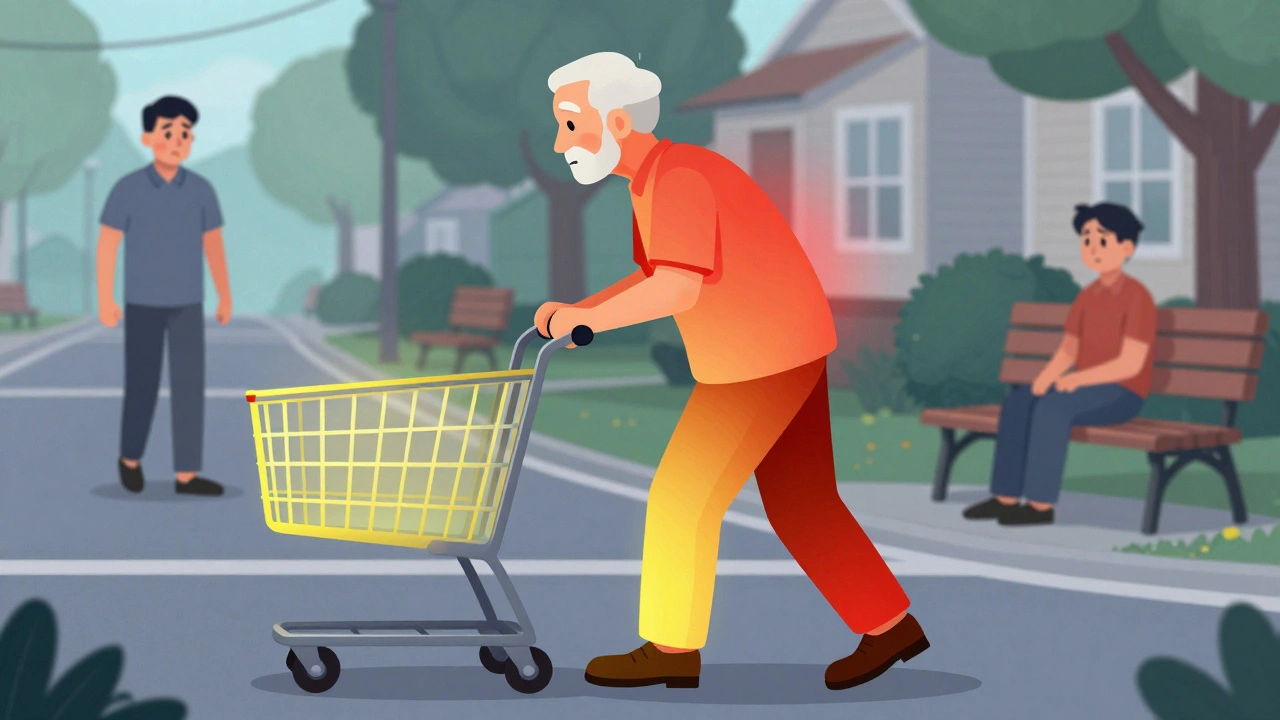
Neurogenic claudication is leg pain caused by spinal stenosis that worsens with walking and improves when bending forward. Learn how to recognize it, avoid misdiagnosis, and choose effective treatments-from exercise to surgery.

When the space around your spinal cord narrows, it presses on nerves—that’s spinal stenosis, a condition where the spinal canal shrinks and compresses nerves, often causing pain, numbness, or weakness in the back, legs, or arms. It’s not rare, especially after 50, and it’s not always from aging alone—injuries, arthritis, or even genetics can trigger it. You might feel like your legs are heavy when walking, or your back locks up after standing too long. That’s not just "getting older." It’s your nerves being squeezed.
Nerve compression, the core problem in spinal stenosis is what makes movement painful. The goal of any spinal stenosis treatment isn’t to reverse the narrowing—it’s to reduce pressure, calm inflammation, and help you move again. That’s where NSAIDs, nonsteroidal anti-inflammatory drugs like ibuprofen or naproxen, used to reduce swelling and ease pain come in. They’re often the first step because they’re accessible, affordable, and work for many. But they’re not a cure. Long-term use can hurt your stomach or kidneys, so doctors watch closely. Physical therapy, stretching, and posture changes are just as important. Some people find relief with epidural steroid injections, which deliver anti-inflammatory medicine right to the affected area. Surgery? It’s an option if nothing else helps and you’re losing function—but most people never need it.
What you won’t find in most guides are the quiet, everyday choices that make the biggest difference: walking more, sitting less, using a cane or walker when needed, and avoiding heavy lifting. These aren’t glamorous, but they keep you mobile. And when medications stop working or side effects pile up, you need to know your alternatives—like switching from one NSAID to another, trying acetaminophen, or even exploring newer pain management tools that don’t rely on pills.
The posts below cover real-world strategies used by patients and providers: how to manage pain without opioids, which drugs cause the least side effects, when to push for physical therapy instead of surgery, and how to spot warning signs that mean you need help fast. You’ll see what actually works after years of trial and error—not just textbook advice. This isn’t about fixing your spine. It’s about getting your life back.
Neurogenic claudication is leg pain caused by spinal stenosis that worsens with walking and improves when bending forward. Learn how to recognize it, avoid misdiagnosis, and choose effective treatments-from exercise to surgery.