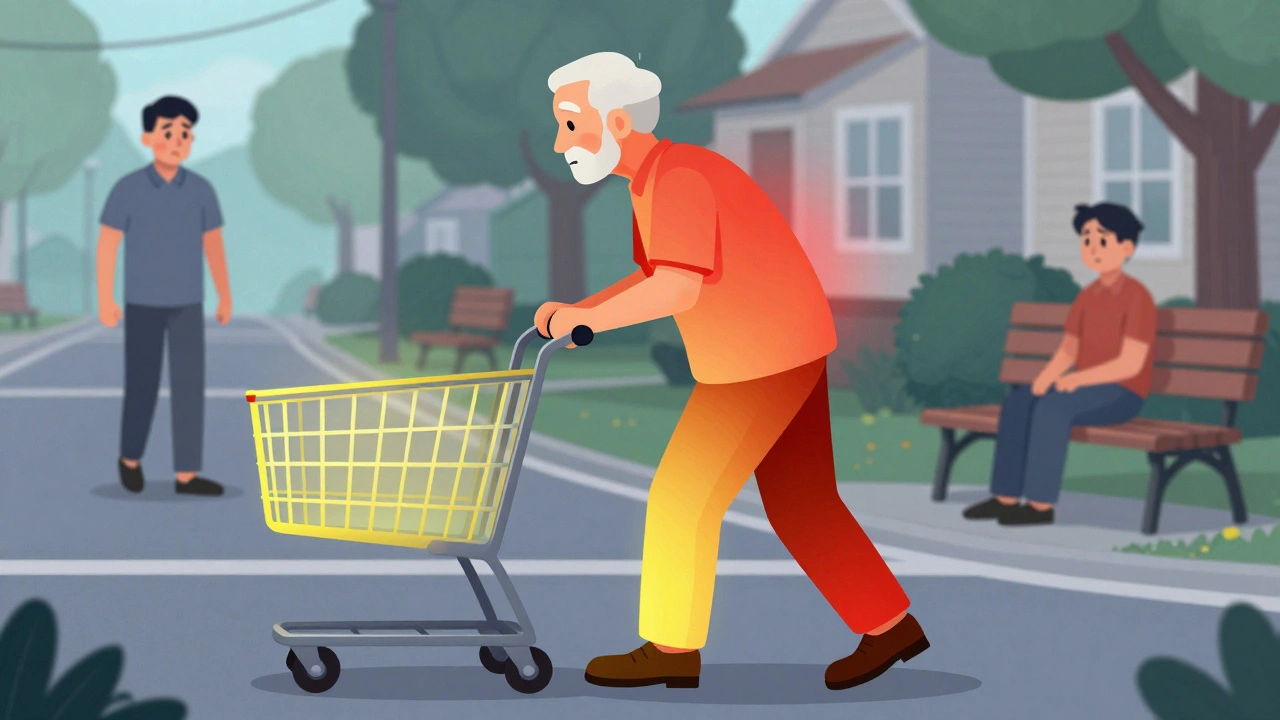
Neurogenic claudication is leg pain caused by spinal stenosis that worsens with walking and improves when bending forward. Learn how to recognize it, avoid misdiagnosis, and choose effective treatments-from exercise to surgery.

When the space around your spinal stenosis, a condition where the spinal canal narrows and puts pressure on the spinal cord or nerves. It’s not just aging—it’s often the result of wear and tear, bone spurs, or thickened ligaments that slowly squeeze the nerves running through your spine. This isn’t just back pain. It’s tingling in your legs, weakness when walking, or numbness that makes you stop mid-step. People over 50 are most at risk, but younger folks with injuries or congenital conditions can get it too.
Spinal stenosis usually happens because of degenerative disc disease, the gradual breakdown of spinal discs that cushion the vertebrae. As discs lose height, the spine shifts, and bone grows abnormally to compensate. That extra bone, along with swollen ligaments or herniated discs, crowds the space where nerves pass. nerve compression, when spinal nerves are pinched or irritated by surrounding tissues is what causes the real trouble—burning pain down the legs, cramping, or even loss of balance. It’s not just discomfort; it’s your body telling you something’s off inside.
Doctors don’t just guess. They use imaging—MRI or CT scans—to see exactly where the narrowing is and which nerves are affected. Treatment isn’t one-size-fits-all. Some people find relief with physical therapy, anti-inflammatories, or epidural steroid injections. Others need surgery to remove the bone or tissue pressing on the nerves. The goal isn’t to cure aging, but to give you back movement without pain.
You’ll find posts here that dig into what medications help with the pain, how to avoid worsening symptoms, and what real patients have learned about managing daily life with spinal stenosis. Some cover how NSAIDs like aceclofenac compare to other options. Others talk about when to push back on insurance for necessary treatments, or how to spot dangerous side effects from long-term use. There’s no magic fix, but there are smart, proven ways to take control.
Neurogenic claudication is leg pain caused by spinal stenosis that worsens with walking and improves when bending forward. Learn how to recognize it, avoid misdiagnosis, and choose effective treatments-from exercise to surgery.