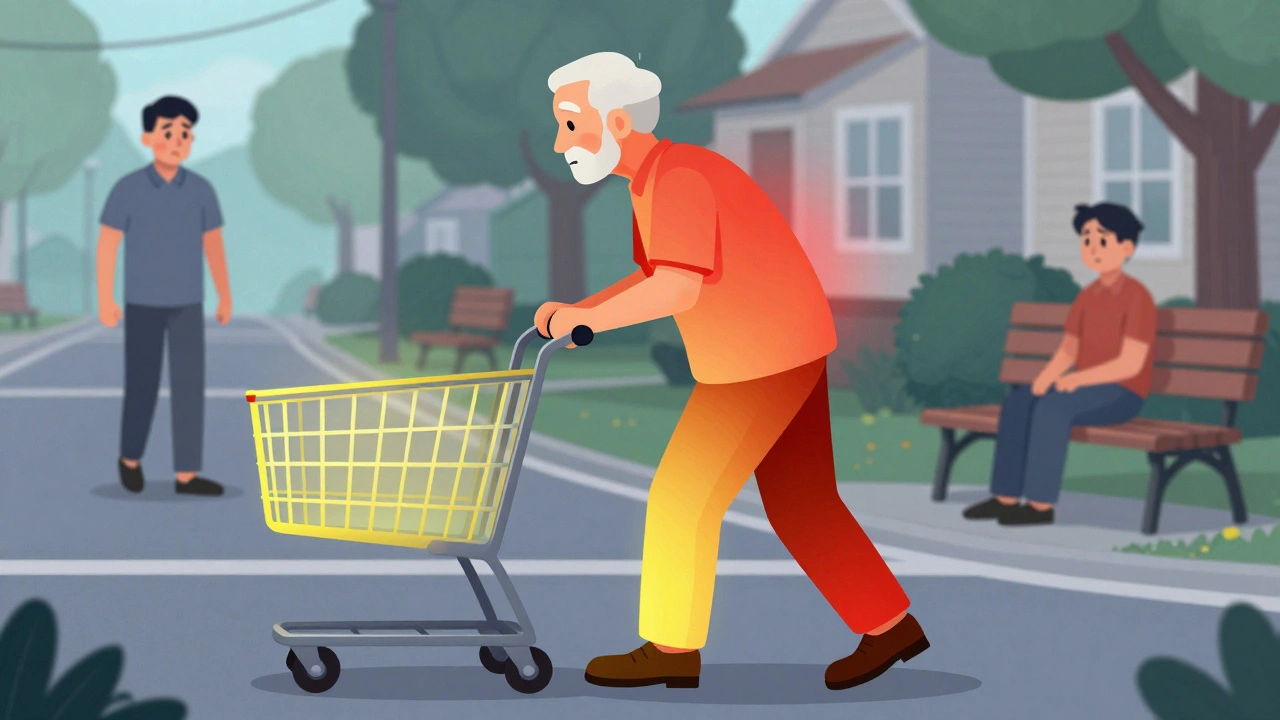
Neurogenic claudication is leg pain caused by spinal stenosis that worsens with walking and improves when bending forward. Learn how to recognize it, avoid misdiagnosis, and choose effective treatments-from exercise to surgery.

When the space around your spinal cord in the lower back narrows, it’s called lumbar stenosis, a condition where bone or tissue compresses nerves in the lower spine, leading to pain, numbness, or weakness in the legs. Also known as spinal stenosis, it’s not just aging—it’s often caused by arthritis, herniated discs, or thickened ligaments that slowly squeeze the nerves. This isn’t just discomfort. People with lumbar stenosis often feel like their legs are heavy, or they get sharp pains when walking—even if they could stand or sit just fine.
It’s not just the spine itself that’s involved. The nerve compression, the pressure on spinal nerves that sends pain signals down the legs is what makes daily life hard. You might notice tingling in your feet, or pain that gets worse after standing for too long. The good news? You don’t have to live with it. Many people find relief with simple pain relief medications, drugs like NSAIDs or muscle relaxants that reduce inflammation and ease nerve pressure. Others use physical therapy, posture changes, or even epidural injections to take the pressure off. Surgery is an option—but most try non-invasive methods first.
What you’ll find in the posts below isn’t just a list of drugs. It’s real talk about what works—and what doesn’t. You’ll see how lumbar stenosis connects to common meds like NSAIDs, why some painkillers help more than others, and how side effects from blood pressure pills or antidepressants can make things worse. There’s also advice on managing symptoms without surgery, what to ask your doctor before switching meds, and how to avoid dangerous interactions. Whether you’re dealing with leg pain after walking, numbness in your feet, or just tired of being told "it’s just aging," this collection gives you the facts without the fluff.
Neurogenic claudication is leg pain caused by spinal stenosis that worsens with walking and improves when bending forward. Learn how to recognize it, avoid misdiagnosis, and choose effective treatments-from exercise to surgery.