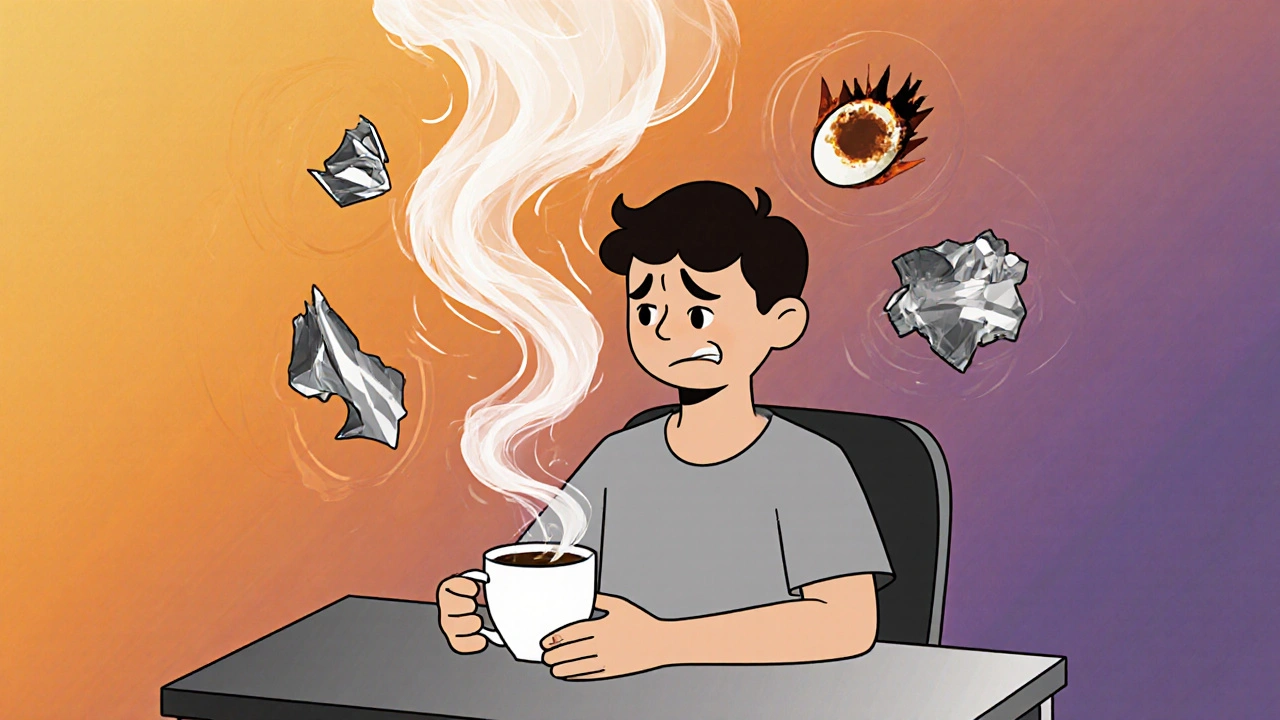
Many medications can cause strange smell changes called dysosmia-making food taste like metal or smoke smell constant. Learn which drugs cause it, how long it lasts, and what to do if it happens to you.

When you can’t smell coffee, garlic, or even your own soap, it’s not just annoying—it’s a sign something’s off. Drug-induced anosmia, the loss of smell caused by medications. Also known as medication-related olfactory dysfunction, it’s more common than most people realize, yet rarely discussed. Unlike colds or allergies, this isn’t temporary congestion. It’s your nose’s wiring getting disrupted by something you took to feel better.
Many drugs affect the nervous system, and since smell relies on delicate nerve signals from your nose to your brain, it’s an easy target. Antihypertensives like ACE inhibitors, antibiotics such as amoxicillin, antithyroid drugs like methimazole, and even some antidepressants and antihistamines have been linked to smell loss. It’s not always the drug itself—it’s how your body reacts. Some people notice it after a few days; others only after months. And once it starts, it doesn’t always go away when you stop the medicine.
It’s not just about missing out on food. Losing your sense of smell affects safety—think smoke, gas leaks, or spoiled milk. It can also lead to depression, weight loss, or social withdrawal. If you’ve noticed your sense of smell fading after starting a new pill, don’t assume it’s just aging. Talk to your doctor. Sometimes switching meds helps. Other times, supplements like zinc or alpha-lipoic acid show promise in small studies. And in rare cases, smell training—sniffing strong scents daily—can rebuild pathways.
What you’ll find below are real stories and facts from people who’ve dealt with this. From how common it is with certain prescriptions to what doctors actually recommend when the smell doesn’t come back. These aren’t guesses. They’re based on clinical reports, patient experiences, and direct comparisons between drugs that do—and don’t—cause this side effect. You won’t find fluff here. Just what works, what doesn’t, and what to ask your provider next.
Many medications can cause strange smell changes called dysosmia-making food taste like metal or smoke smell constant. Learn which drugs cause it, how long it lasts, and what to do if it happens to you.