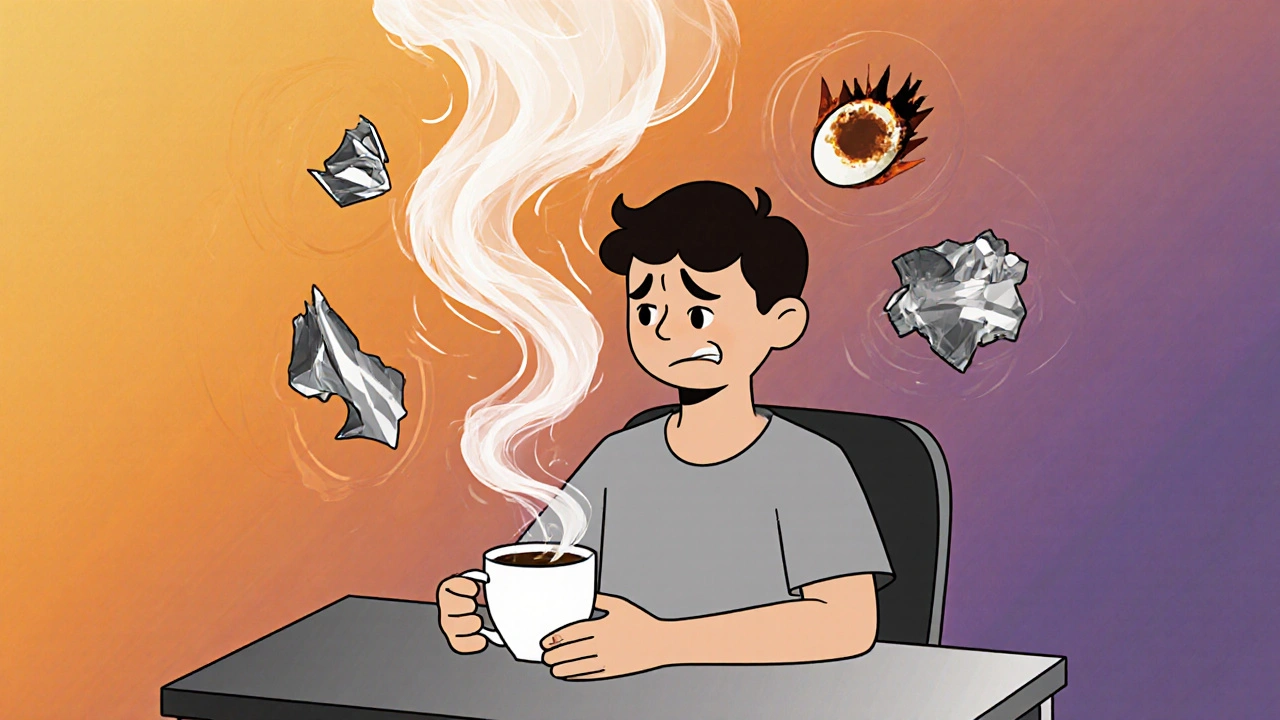
Many medications can cause strange smell changes called dysosmia-making food taste like metal or smoke smell constant. Learn which drugs cause it, how long it lasts, and what to do if it happens to you.

When you take antibiotics, medicines designed to kill or slow down harmful bacteria. Also known as antibacterial agents, they’re one of the most common prescriptions worldwide—but not all side effects are well known. One surprising effect? Loss of smell. It’s not listed on every pill bottle, but studies show certain antibiotics can disrupt your sense of smell, sometimes permanently. This isn’t rare—it happens more often than most doctors admit. People report smelling nothing at all, or worse, smelling things that aren’t there. The connection isn’t just coincidence. Antibiotics like clindamycin, a broad-spectrum antibiotic used for skin, respiratory, and dental infections, and metronidazole, a drug often prescribed for gut infections and bacterial vaginosis, have been tied to olfactory dysfunction in clinical reports and patient forums. The smell loss isn’t always immediate; it can show up days or weeks after starting treatment.
Why does this happen? Antibiotics don’t just target bad bacteria—they can also mess with the delicate nerve cells in your nose that detect odors. These cells are tiny, sensitive, and constantly regenerating. Some antibiotics interfere with their ability to repair themselves. Others trigger inflammation in the nasal lining or alter the mucus that carries smell molecules to your brain. In rare cases, they may even affect the olfactory bulb in your brain itself. It’s not just about the drug, either. Your age, how long you’ve been on the antibiotic, and whether you’ve had recent sinus infections all play a role. People over 50 are more likely to experience lasting smell loss. And if you’ve already had a cold, flu, or COVID-19, your smell system might be more vulnerable. The good news? Most people get their sense of smell back within weeks after stopping the drug. But for about 1 in 10, it doesn’t return fully—sometimes because the nerve damage is too deep.
If you’ve noticed your food tasting bland, or you can’t smell coffee, perfume, or smoke, don’t just assume it’s a cold. Check if you’re on an antibiotic. Talk to your doctor about alternatives. Some antibiotics, like amoxicillin or azithromycin, are less likely to cause this side effect. Don’t stop your meds without advice, but do ask: Is there another option? Are there tests to check your smell function? And if your sense of smell hasn’t returned after a month, see an ENT specialist. There are new therapies—like smell training with essential oils—that have helped people rebuild their sense of smell after antibiotic damage. You’re not alone. Thousands report this every year, and the more we talk about it, the more doctors start listening.
Below, you’ll find real patient experiences and expert-backed guides on how antibiotics affect your body beyond the usual stomach upset or dizziness. From drug comparisons to managing hidden side effects, these posts help you spot the signs early and take control.
Many medications can cause strange smell changes called dysosmia-making food taste like metal or smoke smell constant. Learn which drugs cause it, how long it lasts, and what to do if it happens to you.