
Hyponatremia and Hypernatremia in Kidney Disease: What You Need to Know
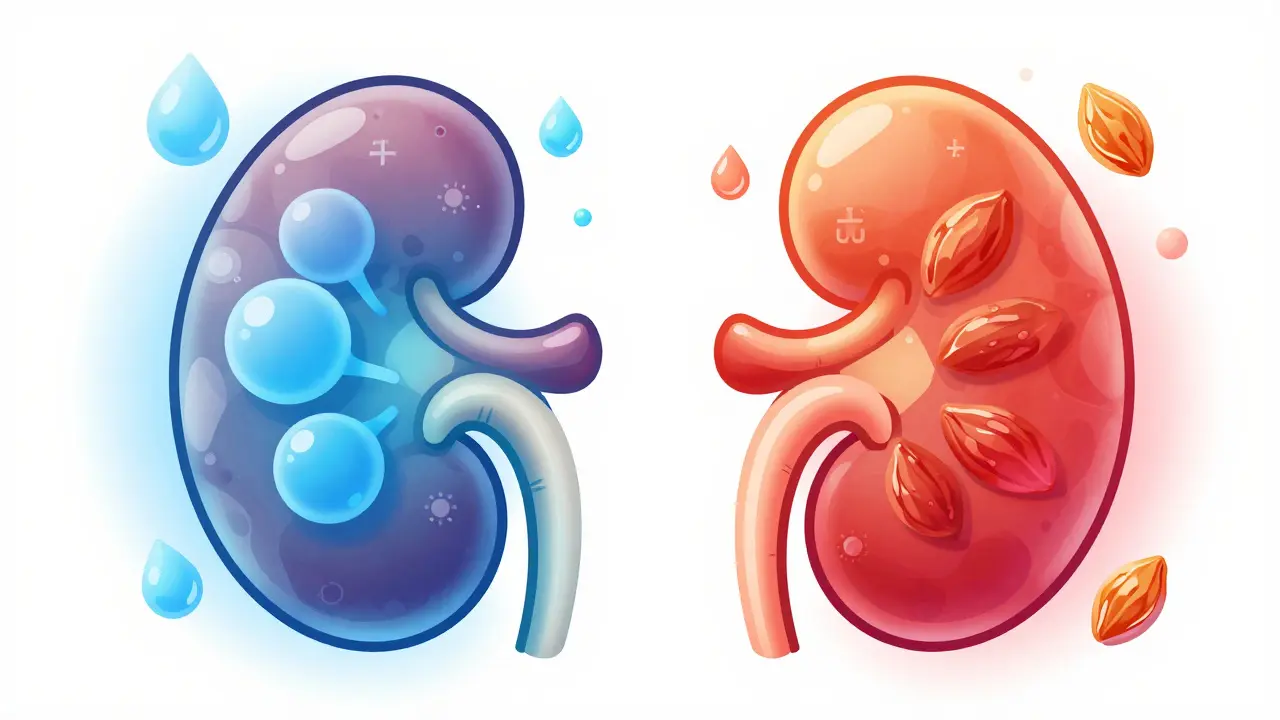
When your kidneys start to fail, they don’t just stop filtering waste-they lose their ability to keep your sodium levels in check. That’s when hyponatremia and hypernatremia become serious risks. These aren’t just lab numbers. For someone with chronic kidney disease (CKD), a sodium level that’s too low or too high can mean falls, confusion, hospital stays, or even death. And it’s more common than most people realize: up to 25% of people with advanced CKD will develop one of these sodium disorders.
What Exactly Are Hyponatremia and Hypernatremia?
Hyponatremia means your blood sodium is below 135 mmol/L. Hypernatremia means it’s above 145 mmol/L. Sodium isn’t just table salt-it’s the main electrolyte that controls how much water is in and around your cells. When sodium drops, water rushes into cells, making them swell. When sodium rises, water leaves cells, making them shrink. Your brain is especially sensitive to these shifts.
In healthy people, your kidneys adjust urine output to keep sodium steady. But in CKD, that system breaks down. By stage 4 or 5 (eGFR under 30 mL/min), your kidneys can’t make enough dilute urine to flush out extra water. They also can’t concentrate urine well when you’re dehydrated. So even small changes in fluid intake can throw sodium levels out of balance.
Why Kidney Disease Makes Sodium Disorders Worse
Your kidneys don’t just filter blood-they fine-tune sodium and water balance. In early CKD (stages 1-3), your kidneys still manage to excrete sodium, but they need to produce more urine to do it. That’s why you might find yourself peeing more often, even if you’re not drinking more.
But as kidney function drops below 30 mL/min, things change. The nephrons-the tiny filtering units-start to lose structure. The inner part of the kidney, where urine gets concentrated, becomes less salty. Vasopressin (ADH), the hormone that tells your kidneys to hold onto water, doesn’t respond properly. And if you’re on diuretics-especially thiazides-your risk of hyponatremia jumps. Thiazides work poorly in advanced CKD but still mess with sodium handling, making them a common culprit.
Here’s the twist: many patients with CKD are told to cut back on sodium, protein, and potassium. That sounds right-until it backfires. Cutting too much salt reduces the solute load your kidneys need to flush out water. Less solute = less ability to make dilute urine = water builds up = hyponatremia. A 2023 Japanese study found that strict dietary restrictions in advanced CKD were linked to higher hyponatremia rates, not lower.
Types of Hyponatremia in CKD
Not all hyponatremia is the same. It’s classified by your body’s fluid volume:
- Euvolemic hyponatremia (most common-60-65% of cases): Your total body water is high, but your sodium level is normal. Your kidneys can’t get rid of the water. Often caused by inappropriate ADH release, thiazide diuretics, or low solute intake.
- Hypervolemic hyponatremia (15-20%): You’re swollen with fluid-edema in legs, lungs, or abdomen. This happens in late-stage CKD with heart failure or nephrotic syndrome. The body holds onto water, diluting sodium.
- Hypovolemic hyponatremia (15-20%): You’ve lost both salt and water, but lost more salt. Could be from vomiting, diarrhea, or salt-wasting kidney diseases like medullary cystic disease.
Hypernatremia is rarer but more dangerous. It usually means you’re dehydrated-either not drinking enough, or losing too much water through urine (osmotic diuresis from high glucose or mannitol). In CKD, your kidneys can’t concentrate urine to save water, so even mild dehydration can spike sodium fast.
The Hidden Dangers: More Than Just a Number
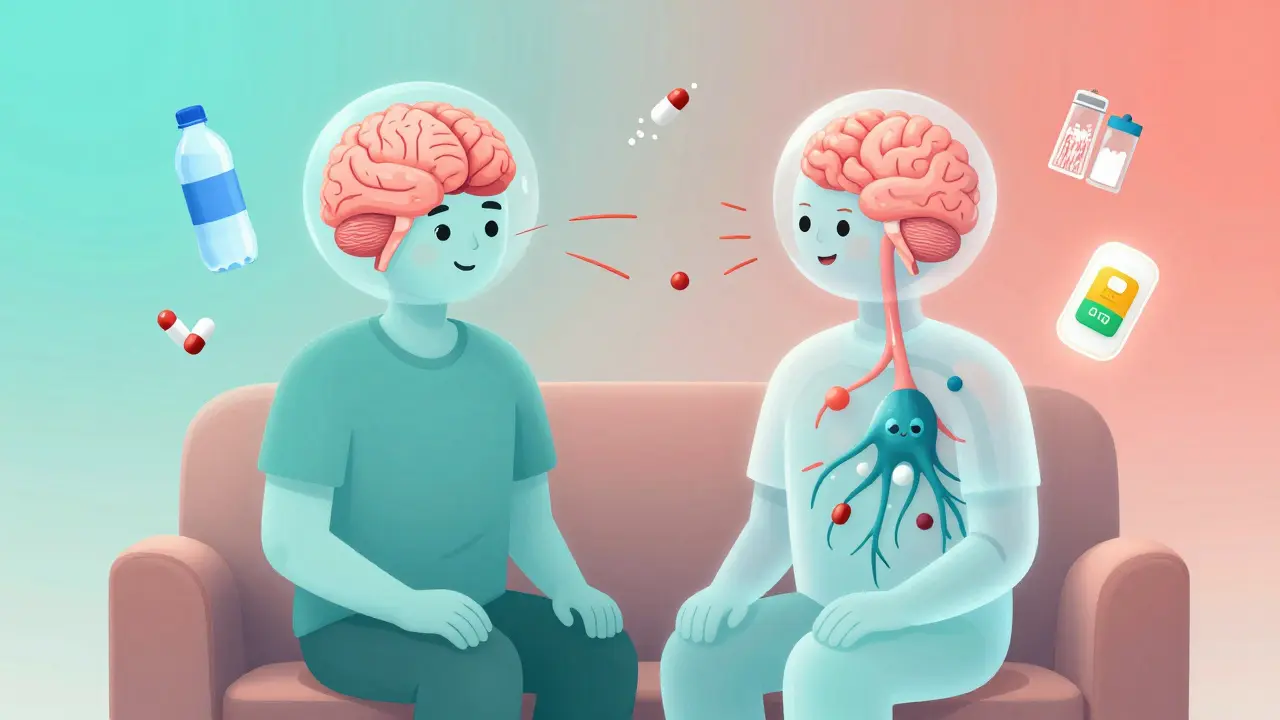
A sodium level of 130 mmol/L might seem mild, but in CKD, it’s a red flag. Studies show hyponatremia in CKD patients increases death risk by nearly 2 times. It’s tied to:
- Cognitive decline-memory and thinking slow down
- Falls and fractures-gait becomes unsteady, bones weaken
- Longer hospital stays-patients with hyponatremia on admission have 28% higher death rates
- Increased risk of osteoporosis-35% of hyponatremic CKD patients have low bone density vs. 23% of those with normal sodium
And it’s not just hyponatremia. Hypernatremia in hospitalized CKD patients carries an even higher mortality risk. The brain shrinks rapidly when sodium rises too fast, leading to seizures or coma. But correcting it too slowly can cause brain swelling. It’s a tightrope walk.
How to Manage Sodium Disorders in CKD
There’s no one-size-fits-all fix. Treatment depends on your kidney function, symptoms, and what’s causing the imbalance.
For Hyponatremia
- Fluid restriction is first-line. For early CKD, 1.5 liters/day is common. For advanced CKD (eGFR <30), drop to 800-1,000 mL/day. But don’t cut too much-your body still needs water to flush out waste.
- Stop or switch diuretics. Thiazides are risky below eGFR 30. Loop diuretics like furosemide are safer and more effective.
- Don’t over-restrict salt. If you’re on a very low-sodium diet (under 1,500 mg/day), you might be making hyponatremia worse. Aim for 2,000-3,000 mg/day unless your doctor says otherwise.
- Supplement sodium only if you have salt-wasting syndrome. That’s rare, but if you’re losing sodium in urine despite low intake, your doctor might prescribe 4-8 grams of sodium chloride daily.
- Never rush correction. Raise sodium by no more than 4-6 mmol/L in 24 hours. Faster than that, and you risk osmotic demyelination-a rare but devastating brain injury.
For Hypernatremia
- Replace water slowly. Use oral fluids if you can swallow. IV fluids if you’re confused or vomiting. Correct sodium by no more than 10 mmol/L in 24 hours.
- Check for causes. Is it dehydration? Diabetes? Medications like lithium or demeclocycline? Treat the root cause.
- Avoid vaptans. Drugs like tolvaptan that block ADH are approved for hyponatremia-but they’re dangerous in advanced CKD. Your kidneys can’t respond to them, and they can make things worse.
What Patients Get Wrong
Most people with CKD try to do the right thing. They cut salt. They drink less. They avoid processed foods. But they don’t realize:
- “Low sodium” doesn’t mean “no sodium.” Your body still needs sodium to function.
- Drinking too little water can cause hypernatremia, especially if you’re sweating or on diuretics.
- Many don’t know the symptoms: nausea, headache, confusion, fatigue, muscle cramps. They blame it on “getting older.”
- Some take over-the-counter meds like ibuprofen or antacids that affect sodium balance-without telling their doctor.
A 2020 study found that 22% of hyponatremia cases in stage 4-5 CKD were caused by patients misunderstanding low-sodium diets. They stopped eating salt entirely, thinking it was healthier. Instead, they made their kidneys work harder to excrete water-and failed.
The New Tools: Monitoring and Care
Good management needs more than guesswork. In 2023, the FDA approved a wearable sodium patch for CKD patients that measures interstitial sodium levels continuously. It’s not perfect-but it’s 85% accurate compared to blood tests. That means you can see trends, not just single numbers.
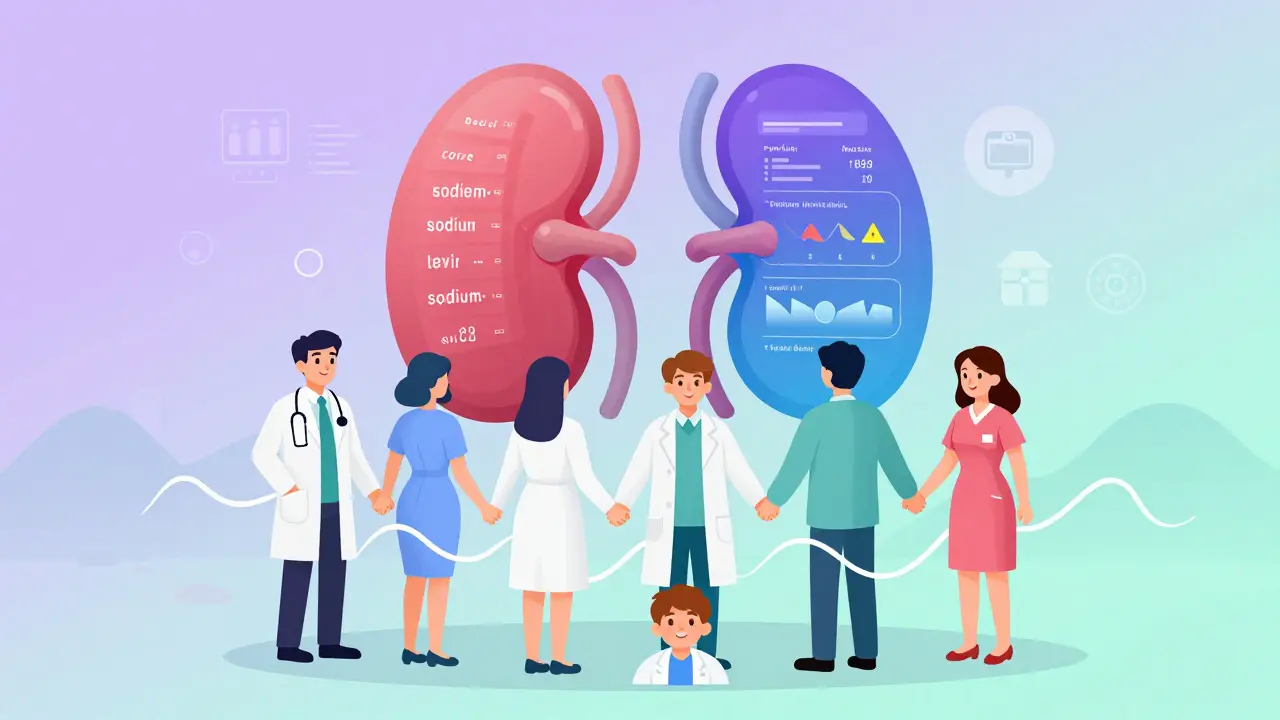
Also, care works better when it’s team-based. A 2022 study showed that when nephrologists, dietitians, pharmacists, and primary care doctors coordinate, hospitalizations for sodium disorders drop by 35%. Patients get regular check-ins, clear instructions, and help adjusting meds and diet.
And education takes time. Most patients need 3-6 sessions with a renal dietitian to understand fluid and sodium balance. It’s not about memorizing numbers-it’s about learning how to listen to your body.
What’s Coming Next
The 2024 KDIGO guidelines are expected to shift focus from rigid fluid limits to personalized targets based on your residual kidney function. Researchers are also looking at the gut-kidney axis-how your intestines might help manage sodium when your kidneys can’t. Early animal studies suggest gut bacteria may influence sodium absorption and excretion.
Meanwhile, global CKD cases are rising. By 2030, there will be 29% more people with kidney disease. In low- and middle-income countries, access to testing and dietitians is still limited. Sodium disorders will become a bigger public health problem unless we act now.
The bottom line? Sodium balance in CKD isn’t about avoiding salt. It’s about matching your intake to what your kidneys can handle. Too much water? Too little salt? Both can kill. Work with your care team. Track your symptoms. Don’t assume you know what’s best-your kidneys are already fighting hard. Let your treatment help, not hurt.
about author

Jacob Cathro
so like... kidneys are just lazy AF now? they used to work, now they just shrug and let sodium do whatever? lol. also why is everyone on diuretics? did the pharma bros bribe every nephrologist?
Paul Barnes
There is a significant body of evidence linking dysregulated vasopressin signaling to euvolemic hyponatremia in advanced chronic kidney disease, particularly in the context of reduced solute intake. The pathophysiology is not merely one of impaired excretion but of maladaptive hormonal response.
pragya mishra
You people are missing the real issue. Big Pharma pushes low-sodium diets because they make more money selling drugs to fix the problems those diets cause. Stop blaming the kidneys and start blaming the system. I’ve seen patients get sicker from ‘healthy’ eating.
Manoj Kumar Billigunta
This is actually really important info. A lot of folks with kidney disease get told to cut salt without understanding how it affects their body’s water balance. I’ve worked with patients who started feeling dizzy and confused after going super low-salt. It’s not just about the number on the scale - it’s about how your body holds water. Talk to your doc before making big changes.
Andy Thompson
THEY’RE DOING IT ON PURPOSE. The WHO, the FDA, the nephrologists - they all got together and decided to make us sick so we’d need more meds. Low sodium? More water? That’s not medicine, that’s control. Look at the data - it’s all rigged. 🤡💉
sagar sanadi
So let me get this straight… we’re told to eat less salt, then we get hyponatremia, so now we’re told to drink less water? Sounds like a scam designed by someone who hates kidneys. 😂
Thomas Varner
Interesting... I didn’t realize that thiazides were still being used in stage 4/5 CKD. That’s... kind of wild. I mean, they’re basically useless at that point, right? But they’re still prescribed? Hmm. I wonder how many of these cases are iatrogenic. 🤔
clifford hoang
Wait… so if your kidneys can’t concentrate urine, and you’re on a low-solute diet… then you’re basically building a water bomb inside your cells? And the brain is the first to explode? 😳 That’s not a medical condition - that’s a horror movie plot. Also, who approved this? The same people who told us fat was evil? 🤡🧪