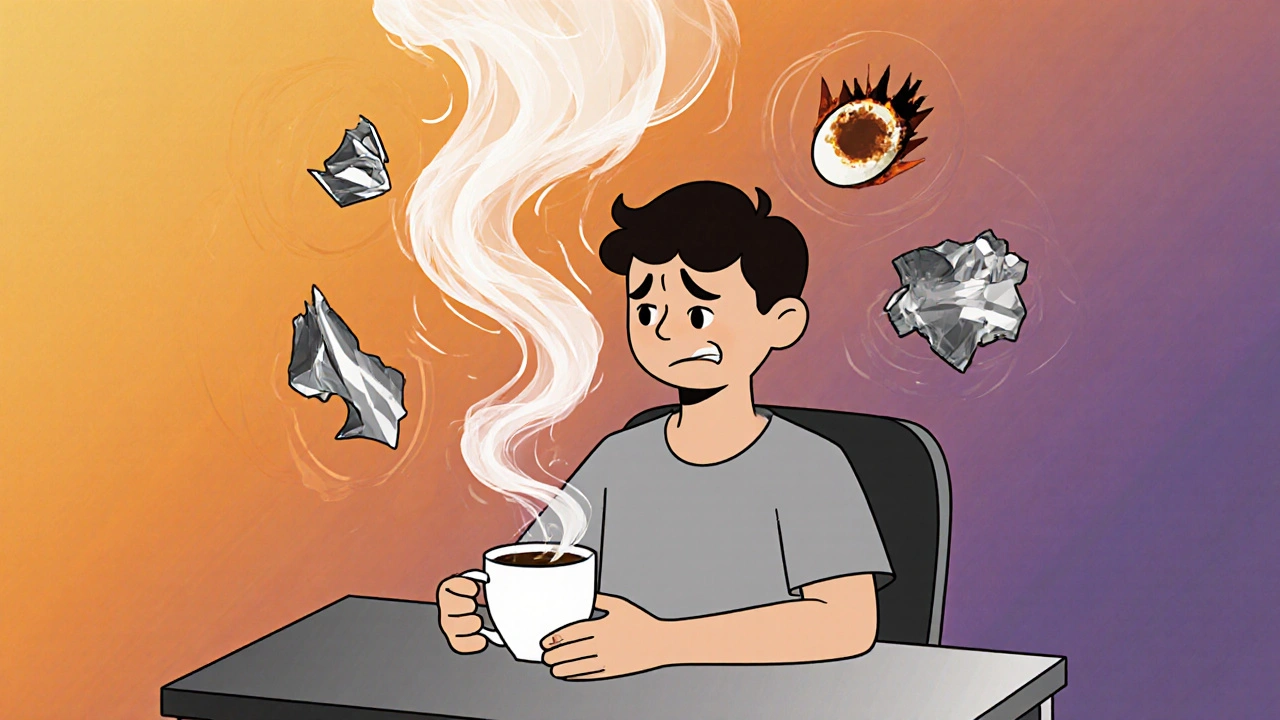
Many medications can cause strange smell changes called dysosmia-making food taste like metal or smoke smell constant. Learn which drugs cause it, how long it lasts, and what to do if it happens to you.

When you can’t smell your coffee, your food tastes like cardboard, or everything smells like burnt plastic, you’re not imagining it. That’s dysosmia, a distortion or loss of the sense of smell. Also known as parosmia, it’s not just an inconvenience—it can make eating unpleasant, warn you of gas leaks or spoiled food, and even affect your mood and safety. Many people assume it’s just a cold that won’t go away, but dysosmia can last for months—or longer—and often ties back to something deeper.
Dysosmia isn’t one thing. It can be caused by nasal congestion, blockage from allergies, polyps, or chronic sinusitis, or by damage to the olfactory nerves after a virus like COVID-19. But it’s also a known side effect of certain medications, including antibiotics, blood pressure drugs, and antidepressants. Some people notice the change right after starting a new pill. Others don’t connect the dots until their favorite meal suddenly smells like ammonia. And while some cases clear up on their own, others need targeted help—like switching meds, treating underlying inflammation, or even smell training.
What’s surprising is how often dysosmia shows up in people managing chronic conditions. If you’re on long-term pain meds, antibiotics for acne, or even antihistamines for allergies, your sense of smell might be quietly affected. It’s not listed on every label, but studies and patient reports confirm it. And if you’ve had a recent infection—especially respiratory—you’re at higher risk. The good news? Most cases aren’t permanent. Smell training, nasal rinses, and adjusting meds under a doctor’s care can bring back your sense of smell, even if it takes months.
Below, you’ll find real-world posts from people who’ve dealt with this. Some found their smell loss linked to a drug they were taking. Others discovered relief after switching treatments or managing nasal inflammation. You’ll see how common it is for dysosmia to appear alongside other side effects—like drowsiness, dry mouth, or bladder changes—because many of these drugs affect the nervous system. This isn’t just about sniffing perfume. It’s about your quality of life, your safety, and knowing when to ask for help.
Many medications can cause strange smell changes called dysosmia-making food taste like metal or smoke smell constant. Learn which drugs cause it, how long it lasts, and what to do if it happens to you.