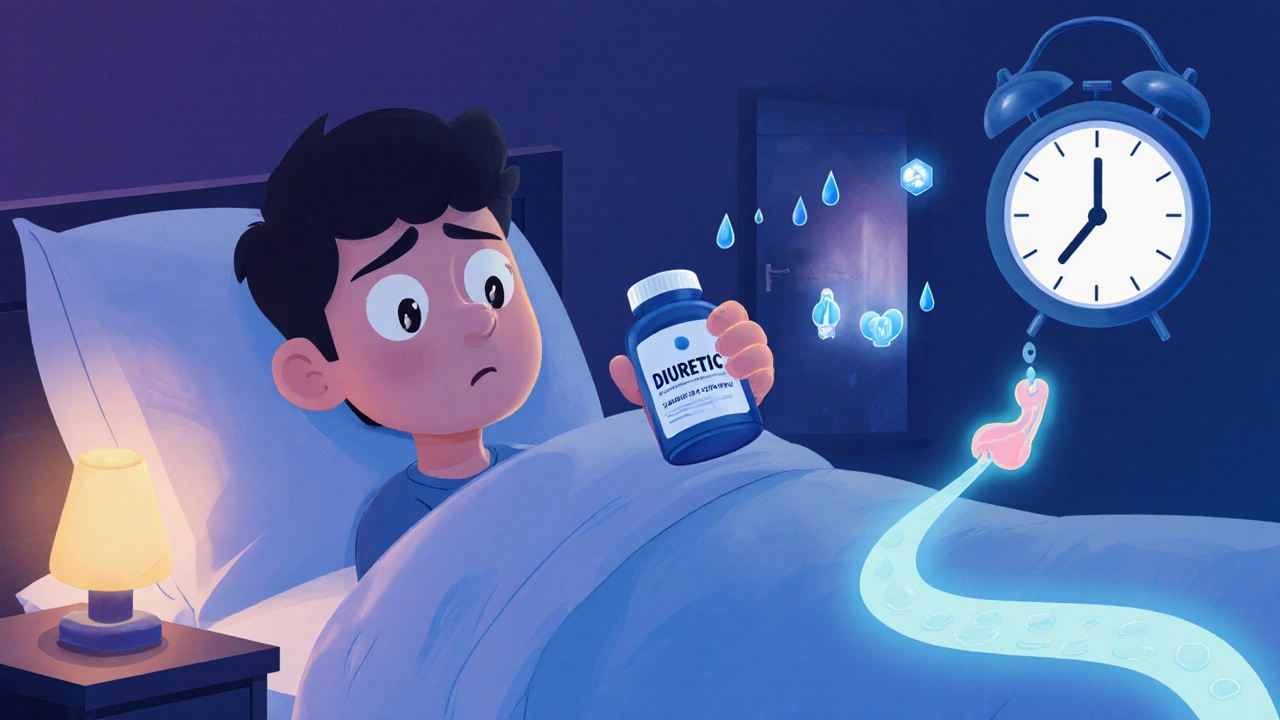
Many medications, from diuretics to antidepressants, can cause frequent urination and urinary urgency. Learn which drugs are most likely to trigger bladder side effects and what you can do to manage them without stopping essential treatments.

When you take a pill for one problem, it shouldn’t mess up another part of your body—unless it’s targeting the bladder, a muscular organ that stores and releases urine. Also known as the urinary bladder, this organ is sensitive to many drugs, especially those that affect nerves or muscles. Bladder side effects aren’t rare. They show up in people taking antidepressants, antihistamines, pain meds, and even some blood pressure pills. You might suddenly feel like you can’t hold it, or you can’t go at all. Either way, it’s not normal—and you don’t have to live with it.
One of the biggest culprits is anticholinergic drugs, medications that block acetylcholine, a nerve signal that tells the bladder to contract. These include drugs like oxybutynin, tolterodine, and trospium, which are meant to treat overactive bladder. But even these can cause dry mouth, constipation, or worse—urinary retention. Other drugs like antihistamines (think Claritin or Benadryl), muscle relaxants, and even some opioids can slow down bladder emptying. On the flip side, diuretics like furosemide or hydrochlorothiazide make you pee more, sometimes too much, too often. And if you’re on multiple meds, the mix can make things worse. It’s not just about the drug itself—it’s about how your body handles it, your age, kidney function, and whether you’re already dealing with bladder issues.
Bladder side effects don’t always show up right away. Sometimes they creep in after weeks or months. You might notice you’re waking up three times a night, or you’re rushing to the bathroom after coffee. Maybe your doctor switched your meds and now you’re struggling to empty your bladder completely. These aren’t just inconveniences—they can lead to infections, falls, or even kidney damage if ignored. The good news? There are ways to manage them. Sometimes switching to a different drug, adjusting the dose, or adding a bladder-friendly alternative like trospium, a selective anticholinergic with fewer brain-related side effects helps. Other times, lifestyle tweaks—like cutting caffeine, timing fluids, or pelvic floor exercises—make a real difference. The posts below cover exactly these situations: which drugs cause bladder problems, how to spot them early, what alternatives exist, and how to talk to your doctor without sounding like you’re overreacting. You’ll find real examples, clear comparisons, and practical fixes—not theory.
Many medications, from diuretics to antidepressants, can cause frequent urination and urinary urgency. Learn which drugs are most likely to trigger bladder side effects and what you can do to manage them without stopping essential treatments.